Book 6: Odysseus Meets Nausicaa on Scheria
Ὀδύσσεια · Book 6 · Classix Modern English Reading Edition
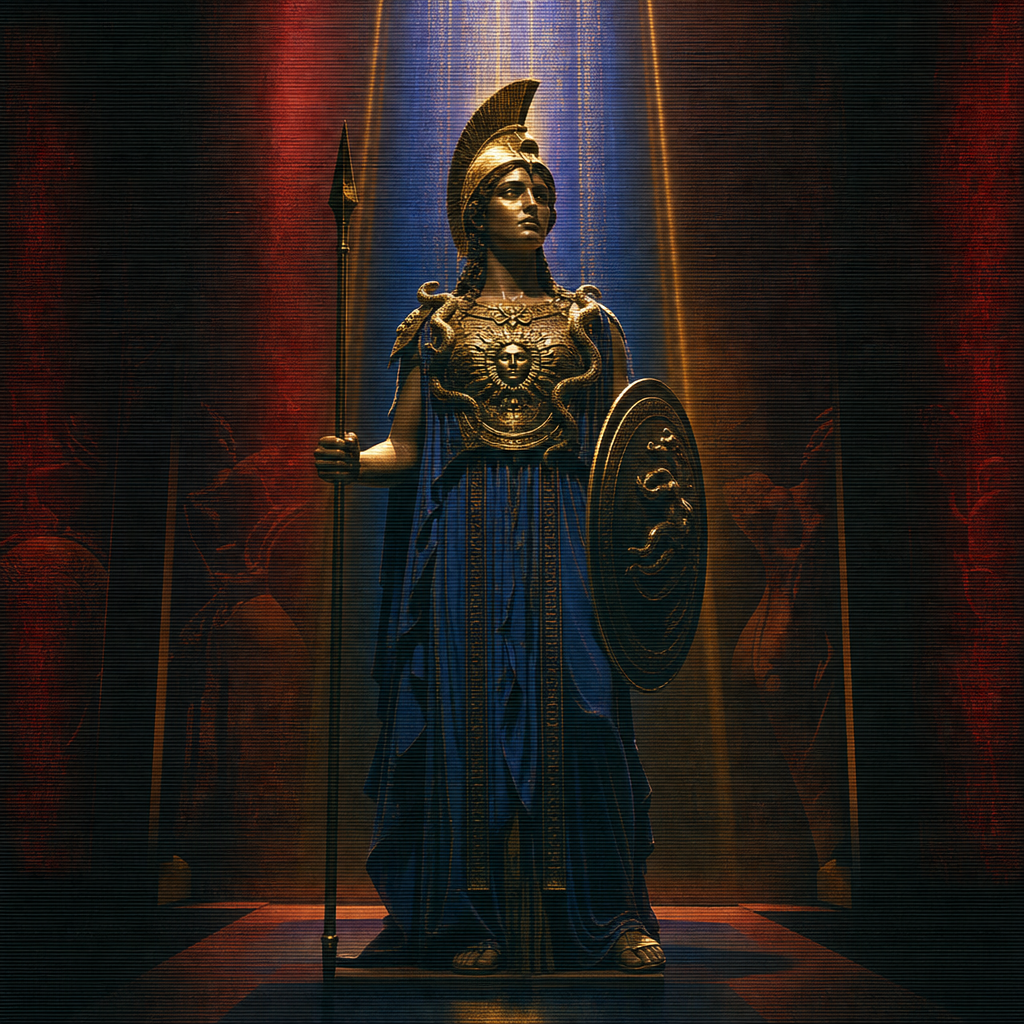
So much-enduring, noble Odysseus slept there, overcome by sleep and exhaustion, while Athena went to the land and city of the Phaeacians. They once lived in spacious Hypereia, near the overbearing Cyclopes, who were stronger and kept plundering them. Godlike Nausithous led them away and settled them in Scheria, far from bread-eating men. He built a wall around the city, built houses and shrines for the gods, and divided the fields. But death had already overcome him and he had gone to Hades; Alcinous now ruled, with wisdom given by the gods. Bright-eyed Athena went to his house, planning the homecoming of great-hearted Odysseus.
Read Ancient Greek Source (Odyssey.6.1–Odyssey.6.14)
She went into the richly crafted bedroom where a girl was sleeping, like the immortal goddesses in build and beauty: Nausicaa, daughter of great-hearted Alcinous. Beside her lay two attendants, gifted with beauty by the Graces, one by each doorpost, and the shining doors were shut. Like a breath of wind Athena rushed to the girl’s bed, stood above her head, and spoke to her, taking the likeness of the daughter of Dymas, famed for his ships—a girl her own age, who was dear to her heart. Taking her likeness, bright-eyed Athena spoke to her:
Read Ancient Greek Source (Odyssey.6.15–Odyssey.6.24)
“Nausicaa, how did your mother come to have such a careless daughter? Your fine clothes lie neglected, yet your wedding is near. You will need fine clothes yourself and must provide them for those who escort you. These things bring a good name among people, and joy to your father and honored mother. Let us go and wash them at dawn. I will come and help, so you can be ready soon: you will not remain unmarried much longer. Already the finest men throughout the Phaeacian land, your own people, are courting you. Ask your famous father early in the morning to have mules and a wagon ready for the sashes, robes and fine blankets. It will be much better for you to ride than walk: the washing places are far from town.”
Read Ancient Greek Source (Odyssey.6.25–Odyssey.6.40)
Speaking thus, bright-eyed Athena departed to Olympus, where they say the dwelling of the gods remains forever secure. Winds never shake it, nor does rain ever drench it, nor does snow come near, but clear sky spreads cloudless, and a white radiance runs over all; there the blessed gods take their delight all their days. There the bright-eyed goddess went after she had instructed the girl.
Read Ancient Greek Source (Odyssey.6.41–Odyssey.6.47)
Dawn on her lovely throne came and woke Nausicaa in her fine robes. Astonished by the dream, she went through the halls to tell her dear father and mother. She found them inside: her mother sat by the hearth with her attendants, spinning sea-purple yarn, and she met her father on his way out to join the renowned kings in council, where the proud Phaeacians had summoned him.
Read Ancient Greek Source (Odyssey.6.48–Odyssey.6.55)
Standing right beside her dear father, she spoke to him: “Papa dear, would you have a high wagon with good wheels made ready for me? I want to take my fine clothes to the river and wash them. They are lying dirty. And you ought to wear clean clothes when you sit with the foremost men in council. You have five sons at home, too: two married and three young bachelors in their prime. They always want freshly washed clothes when they go to a dance, and all that falls to me.”
Read Ancient Greek Source (Odyssey.6.56–Odyssey.6.65)
She was shy about mentioning her own joyful wedding to her dear father. But he understood everything and answered: “I do not begrudge you the mules, child, or anything else. Go on. The slaves will get a high wagon with good wheels ready for you, fitted with an upper frame.” He called to the slaves, and they obeyed.
Read Ancient Greek Source (Odyssey.6.66–Odyssey.6.71)
Outside, they took the smooth-rolling mule wagon and readied it, and led the mules forward and yoked them to the wagon; meanwhile the girl brought the shining clothing from her bedroom and stowed it in the polished wagon, while her mother packed a chest with pleasing food of every sort, put in savories, and poured wine into a goatskin bottle; and the girl climbed onto the wagon. Her mother also handed her liquid olive oil in a golden flask, so that she and her serving women might bathe and anoint themselves. Then Nausicaa took up the whip and the glossy reins, and cracked the whip to start; there was a clatter of the two mules. They strained forward without flagging, carrying the clothes and the girl—not alone, for her other attendants walked along beside her.
Read Ancient Greek Source (Odyssey.6.72–Odyssey.6.84)
When they reached the lovely stream of the river, where the year-round washing basins stood, and abundant water welled up clear and poured through, enough to cleanse even the heaviest dirt, there they unhitched the mules from under the wagon. They drove them along the eddying river to graze on honey-sweet grass; and from the wagon they lifted the clothes in their arms, carried them into the dark water, and trod them swiftly in the troughs, vying with one another. Then, when they had washed them and rinsed away every stain, they spread them out in a row along the seashore, right where the sea used to wash the pebbles clean against the land. And after they had bathed and rubbed themselves richly with olive oil, they took their meal beside the banks of the river, while they waited for the clothes to dry in the brightness of the sun.
Read Ancient Greek Source (Odyssey.6.85–Odyssey.6.98)
When Nausicaa and the enslaved women had eaten their fill, they threw off their headscarves and played ball. White-armed Nausicaa led their song and dance. As Artemis who showers arrows ranges over the mountains, towering Taygetus or Erymanthus, delighting in wild boars and swift deer, while the nymphs of the wilds, daughters of Zeus who bears the aegis, play beside her, and Leto’s heart rejoices—Artemis holds her head and brow above them all, easy to recognize though all are beautiful—so the unwed girl stood out among her attendants.
Read Ancient Greek Source (Odyssey.6.99–Odyssey.6.109)
When she was about to fold the fine clothes, yoke the mules and go home, bright-eyed Athena planned the next step: Odysseus was to wake and see the lovely-faced girl who could guide him to the Phaeacians’ city. The princess threw the ball to an attendant, missed her, and sent it into a deep eddy. Their loud cry woke noble Odysseus. He sat up, pondering in his mind and heart:
Read Ancient Greek Source (Odyssey.6.110–Odyssey.6.118)
“What people’s land have I reached this time? Are they violent and savage, without justice, or welcoming to strangers and mindful of the gods? I heard the cries of girls all around me—nymphs, perhaps, who live on steep mountain peaks, at river springs and in grassy meadows? Or am I near people with human voices? I will go and find out for myself.”
Read Ancient Greek Source (Odyssey.6.119–Odyssey.6.126)
Noble Odysseus crept out from the bushes. With his strong hand he broke off a leafy branch from the thick brush to cover his genitals. He went forward like a mountain-bred lion trusting his strength, who goes through wind and rain with blazing eyes in search of cattle, sheep or wild deer. Hunger drives him even into a sturdy fold to try for the sheep. So Odysseus was about to approach the girls with lovely braids, naked though he was: need drove him on.
Read Ancient Greek Source (Odyssey.6.127–Odyssey.6.136)
He looked terrifying to them, fouled and crusted with sea-brine, and they scattered in panic, this way and that, along the jutting spits of shore. Only the daughter of Alcinous stood her ground, for Athena put courage in her heart and took the fear from her limbs. She stood facing him. Odysseus considered whether to clasp the lovely-faced girl’s knees and beg her, or stay at a distance and ask in gentle words if she would show him the town and give him clothes. He decided it was better to plead gently from a distance, lest touching her knees anger her. At once he spoke, gently and shrewdly:
Read Ancient Greek Source (Odyssey.6.137–Odyssey.6.148)
“I implore you, my lady: are you a goddess or a mortal? If you are one of the gods who hold wide heaven, then to Artemis, daughter of great Zeus, I compare you most closely in beauty, stature, and bearing. But if you are one of the mortals who live on earth, three times blessed are your father and your honored mother, and three times blessed your brothers! Surely their hearts always warm with joy because of you, whenever they see such a young shoot stepping into the dance. And that man is blessed in his heart above all others, who brings rich bride-gifts and leads you to his home. For I have never yet seen such a mortal with my own eyes, neither man nor woman; awe holds me as I look at you.
Read Ancient Greek Source (Odyssey.6.149–Odyssey.6.161)
“Once on Delos, beside Apollo’s altar, I saw a young palm shoot springing up like you. I went there with a great company on that journey that was to bring me bitter grief. I stood amazed at it for a long time: no such tree had ever risen from the earth. In the same way I admire you, lady, and stand in wonder. I am terribly afraid to touch your knees, though heavy sorrow weighs on me.
Read Ancient Greek Source (Odyssey.6.162–Odyssey.6.169)
“Yesterday, on the twentieth day, I escaped the wine-dark sea. All that time waves and swift storms carried me from Ogygia. Now a god has thrown me here, perhaps to suffer still more trouble. I do not think it will stop: the gods will bring much more upon me first. Pity me, lady. After so many hardships you are the first person I have approached. I know no one else in this land and city. Show me the town and give me a scrap to wrap around myself, if you brought any cloth to wrap the clothes in.
Read Ancient Greek Source (Odyssey.6.170–Odyssey.6.179)
“May the gods grant you all you wish for: a husband, a home and the blessing of concord. Nothing is stronger or better than a man and woman keeping their house in harmony of mind—a grief to their enemies, a joy to their friends, and they know its worth best themselves.”
Read Ancient Greek Source (Odyssey.6.180–Odyssey.6.185)
White-armed Nausicaa answered him: “Stranger, you seem neither base nor foolish. Olympian Zeus gives each person, good or bad, whatever fortune he wishes. He has given you this lot, and you must bear it. But since you have come to our land and city, you will lack neither clothes nor anything else due to a hard-tried suppliant. I will show you the town and tell you our people’s name. Phaeacians live in this land and city, and I am the daughter of great-hearted Alcinous. The Phaeacians’ power and strength rest with him.”
Read Ancient Greek Source (Odyssey.6.186–Odyssey.6.197)
So she spoke, and called out to her maids with their lovely braids: “Stand still, my maids! Where are you fleeing at the sight of a man? Do you really think he is some hostile man? There is no living mortal man—nor will one ever be born—who could come to the land of the Phaeacian men bringing war and destruction, for we are very dear to the immortals. We live far apart in the surging sea, at the world's edge, and no other mortals come to mingle with us. No, this is some poor, wretched wanderer who has come here, and now we must care for him; for from Zeus come all strangers and beggars, and a gift, though small, is welcome. Come, maids, give the stranger food and drink, and wash him in the river, where there is shelter from the wind.”
Read Ancient Greek Source (Odyssey.6.198–Odyssey.6.210)
So she spoke. They halted and called to one another, and seated Odysseus down in a sheltered spot, just as Nausicaa, daughter of great-hearted Alcinous, had commanded. Beside him they laid out clothes, a cloak and a tunic, and gave him liquid olive oil in a golden flask, and urged him to wash in the flowing stream of the river.
Read Ancient Greek Source (Odyssey.6.211–Odyssey.6.216)
Then godlike Odysseus spoke to the maids: “Attendants, stand a little way off while I wash the salt from my shoulders and rub myself with oil. It has been a long time since my skin knew oil. I will not bathe before you. I am ashamed to be naked among girls with lovely braids.”
Read Ancient Greek Source (Odyssey.6.217–Odyssey.6.222)
So he spoke, and they went aside and told the girl. Then godlike Odysseus washed from his skin with river water the encrusted salt that covered his back and broad shoulders, and from his head he scrubbed the scum of the barren sea. But when he had washed himself all over and rubbed himself richly with oil, and put on the clothes the unwed girl had given him, Athena, born of Zeus, made him taller and sturdier to look upon, and down from his head she made his hair curl in thick locks like the hyacinth flower. Just as when a skillful man overlays silver with gold—a craftsman whom Hephaestus and Pallas Athena have taught every kind of art, and he finishes works full of grace—so she poured grace over his head and shoulders. Then he went apart and sat down on the shore of the sea, gleaming with beauty and grace, and the girl gazed at him in wonder.
Read Ancient Greek Source (Odyssey.6.223–Odyssey.6.237)
Then she spoke to her attendants with lovely hair: “Listen, white-armed attendants. This man has not come among the godlike Phaeacians against the will of every god on Olympus. At first he seemed unsightly; now he looks like the gods who hold wide heaven. I wish a man like him could be my husband, living here, and that he would be happy to stay. Give the stranger food and drink.”
Read Ancient Greek Source (Odyssey.6.238–Odyssey.6.246)
So she spoke, and they listened readily to her and obeyed, and set food and drink beside Odysseus. Then much-enduring, godlike Odysseus drank and ate ravenously, for he had gone a long time without tasting food.
Read Ancient Greek Source (Odyssey.6.247–Odyssey.6.250)
Then white-armed Nausicaa turned her thoughts to what came next: she folded the clothes and placed them in the fine wagon, yoked the strong-hoofed mules, climbed up herself, and urged Odysseus on, speaking to him directly: “Get up, stranger, and come toward the city. I will guide you to my wise father’s house, where you will meet all the finest Phaeacians. Do this—you seem sensible enough. While we pass through the countryside and the worked fields, follow briskly with the attendants behind the mules and wagon. I will lead the way.
Read Ancient Greek Source (Odyssey.6.251–Odyssey.6.261)
“When we reach the city, you will find a high wall around it, with a fine harbor on either side and a narrow entrance. Curved ships are drawn up along the road: everyone has his own slipway. Their assembly place is there around the fine precinct of Poseidon, fitted with quarried stones set deep in the earth. There they tend their black ships’ tackle, cables and sails, and shave their oars. The Phaeacians care little for bows or quivers. They care for masts, oars and well-balanced ships, in which they proudly cross the gray sea.
Read Ancient Greek Source (Odyssey.6.262–Odyssey.6.272)
“I want to avoid their bitter gossip and blame behind my back. Some people here are very insolent. Some ill-natured man might meet us and say: ‘Who is this handsome, tall stranger following Nausicaa? Where did she find him? He must be her husband. Did she rescue some wandering man from a distant ship? No one lives near us. Or has a god, long prayed for, come down from heaven in answer to her prayers, to keep her all her days? Better if she has gone and found herself a husband elsewhere, since she despises all the fine Phaeacian men who court her here.’ That is what they will say, and I would be disgraced. I would blame another girl myself if she mingled with men against her dear parents’ will while they were still alive, before coming to a public wedding.
Read Ancient Greek Source (Odyssey.6.273–Odyssey.6.288)
“Listen carefully, stranger, so you can soon gain an escort home from my father. Near the road you will find Athena’s splendid poplar grove, with a spring inside and a meadow around it. My father’s estate and flourishing orchard are there, a shout’s distance from the city. Sit and wait there until we have gone into town and reached my father’s house. When you think we have arrived, go into the Phaeacians’ city and ask for the house of my father, great-hearted Alcinous.
Read Ancient Greek Source (Odyssey.6.289–Odyssey.6.299)
“It is easy to recognize; even a little child could lead you there. None of the Phaeacians’ houses is like the hero Alcinous’ palace. Once you are inside the courtyard and house, go quickly through the hall until you reach my mother. She sits by the hearth in the firelight, spinning sea-purple yarn, a wonder to see, leaning against a pillar. Enslaved women sit behind her. My father’s throne is beside her; he sits there drinking wine like an immortal. Pass him by and clasp my mother’s knees, so you can soon rejoice in the day of your return, even if you come from far away. If she feels kindly toward you, there is hope that you will see your loved ones and reach your well-built house and your native land.”
Read Ancient Greek Source (Odyssey.6.300–Odyssey.6.315)
So she spoke, and struck with the shining whip the mules, and they quickly left the streams of the river. They trotted steadily on, stepping out briskly with their hooves; and she drove with care, so that those on foot could keep pace together—her attendants and Odysseus—and she plied the lash with judgment. The sun set, and they reached the famous grove sacred to Athena, where godlike Odysseus sat down. At once he prayed to the daughter of great Zeus:
Read Ancient Greek Source (Odyssey.6.316–Odyssey.6.323)
“Hear me, child of aegis-bearing Zeus, Tireless One! Listen to me now at last, since before you never listened to me when I was battered, as the famous Earthshaker battered me. Grant that I come among the Phaeacians welcomed as a friend and pitied.”
Read Ancient Greek Source (Odyssey.6.324–Odyssey.6.327)
Pallas Athena heard his prayer. She did not yet appear before him, out of regard for her father’s brother, Poseidon. He was fiercely angry with noble Odysseus until the hero reached his own land.