Book 1: The Quarrel of Achilles and Agamemnon
Ἰλιάς · Book 1 · Classix Modern English Reading Edition
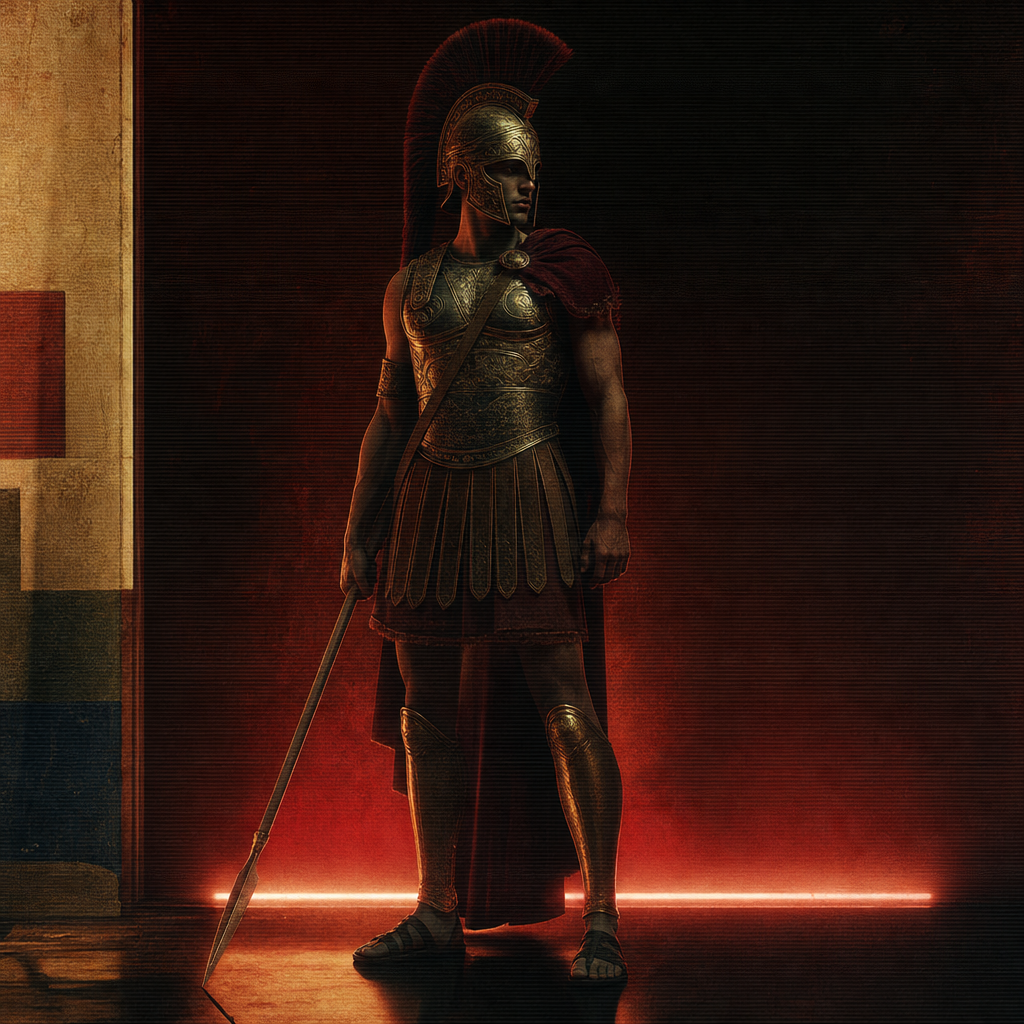
Sing, goddess, the ruinous wrath of Peleus's son Achilles, which brought countless griefs upon the Achaeans, hurled many mighty souls of heroes down to Hades, and made their bodies prey for dogs and all the birds; and the will of Zeus was being fulfilled from the moment those two first parted in strife—Atreus's son, lord of men, and godlike Achilles.
Read Ancient Greek Source (Iliad.1.1–Iliad.1.7)
Which of the gods brought those two into this quarrel? The son of Leto and Zeus; for in his rage at the king he drove a deadly plague through the army, and the men were dying, because Atreus's son had dishonored the priest Chryses. For Chryses came to the swift ships of the Achaeans to ransom his daughter, bringing a boundless ransom and holding in his hands the sacred ribbons of far-shooting Apollo on a golden staff; and he pleaded with all the Achaeans, above all the two sons of Atreus, marshals of the army:
Read Ancient Greek Source (Iliad.1.8–Iliad.1.16)
"Sons of Atreus, and you other Achaeans in fine leg armor, may the gods who keep the halls of Olympus grant that you sack Priam's city and reach home safely; but free my dear child for me and accept this ransom, out of reverence for Zeus's son, far-shooting Apollo."
Read Ancient Greek Source (Iliad.1.17–Iliad.1.21)
Then all the other Achaeans cried out in assent, urging that the priest be respected and the splendid ransom accepted; yet this did not please the heart of Agamemnon, son of Atreus, and he drove him roughly away and laid a harsh command upon him:
Read Ancient Greek Source (Iliad.1.22–Iliad.1.25)
"Let me not catch you by the hollow ships, old man, either lingering here now or coming back again later, or the god's staff and ribbons may do nothing to protect you. I will not free her. Sooner will old age come upon her in our house in Argos, far from her fatherland, walking back and forth at the loom and sharing my bed. Go now, and do not provoke me, if you wish to get back safely."
Read Ancient Greek Source (Iliad.1.26–Iliad.1.32)
So he spoke, and the old man was afraid and obeyed his word. He walked in silence along the shore of the loud-roaring sea; and once he had gone far apart, the old man prayed earnestly to Lord Apollo, whom lovely-haired Leto bore:
Read Ancient Greek Source (Iliad.1.33–Iliad.1.36)
"Hear me, God of the Silver Bow, who stand guard over Chryse and sacred Cilla, and rule Tenedos in your might, Smintheus! If ever I roofed a pleasing temple for you, or if ever I burned for you the fat thigh-pieces of bulls and goats, fulfill this wish for me: let the Danaans pay for my tears under your arrows."
Read Ancient Greek Source (Iliad.1.37–Iliad.1.42)
So he spoke in prayer, and Phoebus Apollo heard him. Down from the peaks of Olympus he strode, furious at heart, carrying his bow and closely covered quiver on his shoulders. The arrows clanged on the shoulders of the angry god as he moved, and he came on like night. Then he sat down apart from the ships and let fly an arrow, and a terrible clang rang from the silver bow. First he assailed the mules and the swift hounds, and then he aimed his piercing shaft at the men themselves and kept striking them; and thick funeral pyres of the dead burned without ceasing.
Read Ancient Greek Source (Iliad.1.43–Iliad.1.52)
For nine days the god's shafts ranged through the camp, and on the tenth day Achilles called the army to assembly; for the white-armed goddess Hera put it in his mind, because she cared for the Danaans as she watched them dying. When they had gathered and come together in one place, swift-footed Achilles rose and spoke among them:
Read Ancient Greek Source (Iliad.1.53–Iliad.1.58)
"Son of Atreus, I think we will now be driven back from our course and return home again—if indeed we escape death—since war and plague together are breaking the Achaeans. Come then, let us ask some seer or priest, or even an interpreter of dreams—for dreams too come from Zeus—to tell us why Phoebus Apollo is so angry: whether he faults us over a vow or a hecatomb, in hope that he may be willing to accept the rich smoke of lambs and unblemished goats and ward off ruin from us."
Read Ancient Greek Source (Iliad.1.59–Iliad.1.67)
When he had spoken, he sat down, and among them rose Calchas, son of Thestor, by far the best reader of bird-signs, who knew what is, what will be, and what had gone before, and who had guided the Achaean ships to Ilion by the prophetic skill that Phoebus Apollo had granted him. With goodwill toward them, he addressed the assembly and said:
Read Ancient Greek Source (Iliad.1.68–Iliad.1.73)
"Achilles, dear to Zeus, you ask me to explain the wrath of Lord Apollo, who strikes from afar. Therefore I will speak; but hear me out and swear to me that you will readily defend me with words and with your own hands. For I think I will anger a man who rules mightily over all the Argives, and whom the Achaeans obey. A king has the upper hand when he grows angry with a lesser man: even if he swallows down his rage for that one day, he keeps the grudge deep in his chest afterward, until he has his revenge. Consider, then, whether you will keep me safe."
Read Ancient Greek Source (Iliad.1.74–Iliad.1.83)
Swift-footed Achilles answered him: "Take heart and speak whatever oracle you know. For by Apollo, dear to Zeus, to whom you pray, Calchas, when you reveal your prophecies to the Danaans, not one of all the Danaans, while I live and look upon the earth, shall lay heavy hands on you beside the hollow ships—not even if you name Agamemnon, who now claims to be by far the best of the Achaeans."
Read Ancient Greek Source (Iliad.1.84–Iliad.1.91)
Then the blameless seer took courage and spoke: "It is not over a vow that he faults us, nor a hecatomb, but because of his priest, whom Agamemnon dishonored when he refused to free his daughter and rejected the ransom. That is why the far-shooter has sent this grief, and will send more; nor will he drive this shameful ruin away from the Danaans until we give the bright-eyed girl back to her dear father without price, without ransom, and lead a sacred hecatomb to Chryse. Only then might we appease him and win him over."
Read Ancient Greek Source (Iliad.1.92–Iliad.1.100)
When he had spoken, he sat down, and among them rose the warrior son of Atreus, wide-ruling Agamemnon, raging in grief; his dark heart filled to the brim with fury, and his eyes were like blazing fire. Glaring with malice, he spoke first of all to Calchas:
Read Ancient Greek Source (Iliad.1.101–Iliad.1.105)
"Prophet of evil, never once have you spoken a welcome word to me. It is always dear to your heart to prophesy disaster, and never yet have you spoken a good word or brought one to pass. And now before the Danaans you proclaim your oracle and say that the far-shooter brings them grief because I refused to accept the splendid ransom for the girl Chryseis—since I much prefer to keep her in my own house. Indeed, I prefer her even to Clytemnestra, my wedded wife, since she is in no way inferior to her, neither in form nor stature, nor in mind or skilled handiwork. Yet even so, I am willing to give her back, if that is better; I want the army to be safe rather than perish. But prepare a prize of honor for me at once, so that I am not the only one of the Argives left without a prize, since that is not fitting. For all of you see that my prize goes elsewhere."
Read Ancient Greek Source (Iliad.1.106–Iliad.1.120)
Then swift-footed, godlike Achilles answered him: "Son of Atreus, most glorious—and greediest for gain of all men—how shall the great-hearted Achaeans give you a prize? We know of no rich common store lying anywhere in reserve; what we plundered from the cities has already been divided, and it is not fitting to gather those shares back again from the men. No, let the girl go now to the god, and we Achaeans will repay you three and four times over, if ever Zeus grants that we sack the strong-walled city of Troy."
Read Ancient Greek Source (Iliad.1.121–Iliad.1.129)
Lord Agamemnon answered him: "Brave as you are, godlike Achilles, do not try to cheat me with your wits; you will not outmaneuver me or persuade me. Do you want to keep your own prize while I simply sit here lacking one, and tell me to give this girl back? No—if the great-hearted Achaeans will give me a prize, suiting it to my mind so that it matches what I lose, well and good; but if they do not give me one, I will go myself and take either your prize, or Ajax's, or I will seize Odysseus's and lead her away, and the man I come to will be furious. Still, we can consider these things again later. For now, come, let us drag a black ship down to the bright sea, gather a fitting crew of rowers, place a hecatomb on board, and bring fair-cheeked Chryseis herself onto the ship. And let one of our council-leaders be captain—either Ajax, or Idomeneus, or godlike Odysseus, or you, son of Peleus, most formidable of all men, so that you may perform the sacred rites and appease the far-working god for us."
Read Ancient Greek Source (Iliad.1.130–Iliad.1.147)
Glaring at him from under his brows, swift-footed Achilles said: "Ah, clothed in shamelessness, with your mind fixed on profit, how can any of the Achaeans readily obey your orders, either to go out on a mission or to fight men with all his strength? It was not on account of the Trojan spearmen that I came here to fight, since they have done me no wrong at all. Never once have they driven off my cattle or my horses, nor ever in rich-soiled Phthia, nurse of men, have they ravaged the harvest, since so much lies between us—shadowy mountains and the roaring sea. No, we followed you, you utterly shameless man, to please you, winning honor from the Trojans for Menelaus and for you, with your dog's eyes—and you neither care about that nor give it a thought. And now you threaten to strip me of my prize yourself, for which I labored hard, and which the sons of the Achaeans gave me. I never receive a prize equal to yours whenever the Achaeans sack a well-settled town of the Trojans. Instead, the brunt of furious war is the work of my own hands; yet whenever the division of spoils comes, your prize is far greater, while I take something small, dear as it is to me, and go back to my ships once I have worn myself out in battle. Now I am going back to Phthia, since it is far better to go home with my curved ships, and I do not intend to stay here dishonored to pile up wealth and riches for you."
Read Ancient Greek Source (Iliad.1.148–Iliad.1.171)
Then Agamemnon, lord of men, answered him: "Run away, then, if your heart is set on it; I certainly will not beg you to stay on my account. I have others by my side who will honor me, and above all Zeus, lord of counsel. To me you are the most hateful of all the kings cherished by Zeus, for strife is always dear to you, and wars and battles. If you are very strong, some god must have given you that. Go home with your ships and your companions, and rule over the Myrmidons! I care nothing for you, nor do I trouble myself over your anger; and I make you this threat: just as Phoebus Apollo is taking Chryseis away from me, I will send her back with my own ship and my own companions, but I will go to your shelter myself and lead away fair-cheeked Briseis, your prize, so that you may know well how much greater I am than you, and any other man may shrink from speaking as my equal and matching himself against me to my face."
Read Ancient Greek Source (Iliad.1.172–Iliad.1.187)
So he spoke. Grief seized the son of Peleus, and the heart within his shaggy chest was torn two ways: whether to draw the sharp sword from beside his thigh, scatter the men there, and kill the son of Atreus, or check his wrath and curb his spirit. While he was weighing this in his mind and spirit and drawing his great sword from its sheath, Athena came down from heaven; for the white-armed goddess Hera had sent her, loving and caring for both men alike in her heart. She stood behind him and caught the son of Peleus by his golden hair, appearing to him alone; none of the others saw her. Achilles was amazed; he spun around, and at once recognized Pallas Athena; and her eyes shone terribly.
Read Ancient Greek Source (Iliad.1.188–Iliad.1.200)
Speaking out, he addressed her with winged words: "Why have you come again, child of aegis-bearing Zeus? Is it to see the outrage of Agamemnon, son of Atreus? I will tell you plainly, and I think it will come to pass: by his own arrogance he may soon lose his life."
Read Ancient Greek Source (Iliad.1.201–Iliad.1.205)
Then the bright-eyed goddess Athena said to him in reply: "I have come down from heaven to hold back your fury, if you will obey; for the white-armed goddess Hera sent me, loving and caring for both men alike in her heart. Come, cease from strife, and do not draw the sword with your hand. Reproach him with words instead, telling him how things will be. For I will tell you plainly, and it shall be fulfilled: one day three times as many splendid gifts will be yours because of this outrage. Hold back now, and obey us."
Read Ancient Greek Source (Iliad.1.206–Iliad.1.214)
Swift-footed Achilles answered her: "A man must observe the word of you both, goddess, however enraged in heart he may be; for that is better. Whoever obeys the gods, to him they listen readily." He spoke, and stayed his heavy hand on the silver hilt, thrusting the great sword back into its sheath, and did not disobey the word of Athena. And she went back to Olympus, to the halls of aegis-bearing Zeus among the other gods.
Read Ancient Greek Source (Iliad.1.215–Iliad.1.222)
Then the son of Peleus once again addressed the son of Atreus in cutting words, and did not yet let go of his wrath: "Heavy with wine, with the eyes of a dog and the heart of a deer! Never once have you dared in your heart to arm yourself for war alongside the troops, or to go into an ambush with the best of the Achaeans—to you that looks like death. No doubt it is far easier, throughout the wide camp of the Achaeans, to strip the gifts from any man who speaks against you! You are a king who devours his people, since you rule over nobodies; otherwise, son of Atreus, this outrage would be your last. But I will tell you plainly, and swear a great oath upon it: by this scepter, which will never again bear leaves and shoots now that it has left its cut stump in the mountains, nor ever bloom again, since the bronze has stripped away its leaves and bark all around, and now the sons of the Achaeans bear it in their hands when they give judgment and uphold the decrees that come from Zeus—and this shall be a great oath to you: someday longing for Achilles will come upon all the sons of the Achaeans together, and then, for all your grief, you will have no power to help them, when many men fall dying at the hands of man-slaying Hector; and you will tear your heart within you, furious that you paid no honor to the best of the Achaeans."
Read Ancient Greek Source (Iliad.1.223–Iliad.1.244)
So spoke the son of Peleus, and he hurled to the ground the scepter studded with golden nails, and sat down himself, while opposite him the son of Atreus raged. Then among them rose Nestor of the sweet words, the clear-voiced speaker of the Pylians, from whose tongue the voice flowed sweeter than honey. In his lifetime two generations of mortal men had already passed away, those who in earlier days were born and reared with him in sacred Pylos, and he was now ruling among the third. With goodwill toward them, he addressed the assembly and said:
Read Ancient Greek Source (Iliad.1.245–Iliad.1.253)
"Ah, what great grief has come upon the Achaean land! Truly Priam would rejoice, and the sons of Priam, and the rest of the Trojans would be glad at heart, if they heard all this about the two of you quarreling, you who surpass all the Danaans in counsel and surpass them in battle. Listen to me, then; you are both younger than I am. For in past days I kept company with even greater men than you, and never once did they make light of me. Never yet have I seen such men, nor shall I see their like again—men such as Pirithous and Dryas, shepherd of the people, Caeneus and Exadius and godlike Polyphemus, and Theseus, son of Aegeus, a man like the immortals. They were the strongest of all men reared upon the earth; the strongest they were, and with the strongest they fought, the mountain-dwelling Centaurs, and destroyed them terribly. And I stood in company with those men after coming from Pylos, far away in a distant land, for they themselves had summoned me; and I fought there to the best of my own strength. Against those men not one of the mortals who live on earth today could fight; yet they listened to my counsels and obeyed my words. So you two must also obey, since obeying is better. You, Agamemnon, great as you are, do not take the girl away from this man, but let him keep her, just as the sons of the Achaeans first gave her to him as a prize of honor. Nor must you, son of Peleus, seek to pit yourself force against force against a king, since a sceptered king to whom Zeus has given glory never has merely an equal share of honor. Even if you are stronger, and a goddess mother bore you, yet this man is greater, because he rules over more men. And you, son of Atreus, check your rage; indeed, I myself beg you to let go of your anger against Achilles, who stands for all the Achaeans as a great bulwark against evil war."
Read Ancient Greek Source (Iliad.1.254–Iliad.1.284)
Lord Agamemnon answered him: "Yes, old man, all that you have said is fair and right. But this man wishes to be above all others; he wishes to hold power over all, to rule over all, and to give orders to all—and there is someone here, I think, who will not obey him. Even if the gods who live forever made him a spearman, do they therefore give him license to insult?"
Read Ancient Greek Source (Iliad.1.285–Iliad.1.291)
Then godlike Achilles broke in and answered him: "Truly I would be called a coward and a nobody if I were to yield to you in every matter, whatever you say. Lay those commands on others; do not give orders to me, for I think I will no longer obey you. And I will tell you something else—take it to heart: I will not fight with my hands for the girl's sake, neither with you nor with anyone else, since you men are taking back what you gave me. But of all the other things that are mine beside my swift black ship, you will not seize and carry off a single one against my will. Come then, try it, so that these men too may know: at once your dark blood will gush around my spear."
Read Ancient Greek Source (Iliad.1.292–Iliad.1.303)
When the two had fought like this with clashing words, they stood up and dissolved the assembly beside the ships of the Achaeans. The son of Peleus went back to his shelters and balanced ships along with the son of Menoetius and his companions. Meanwhile the son of Atreus dragged a swift ship down to the sea, chose twenty rowers for her, and put aboard a hecatomb for the god; then he led fair-cheeked Chryseis and seated her on board, and resourceful Odysseus embarked as captain. So they went aboard and sailed out over the wet sea-paths, while the son of Atreus ordered the army to purify themselves. They purified themselves and threw the washings into the sea, and sacrificed to Apollo unblemished hecatombs of bulls and goats along the shore of the barren sea; and the rich savor rose to heaven, swirling up in the smoke.
Read Ancient Greek Source (Iliad.1.304–Iliad.1.317)
So they labored at these tasks throughout the camp; yet Agamemnon did not let go of the quarrel with which he had first threatened Achilles, but spoke to Talthybius and Eurybates, who were his heralds and ready attendants: "Go to the shelter of Peleus's son Achilles; take fair-cheeked Briseis by the hand and lead her here. If he will not give her up, I will come with more men at my back and seize her myself—and that will be harsher still for him." So speaking, he sent them off and laid his harsh command upon them.
Read Ancient Greek Source (Iliad.1.318–Iliad.1.326)
Unwillingly the two walked along the shore of the barren sea until they came to the shelters and ships of the Myrmidons. They found him sitting beside his shelter and his black ship; and Achilles took no joy in seeing them. Seized with fear and revering the king, the two men stood still, neither speaking a word to him nor asking anything; but he understood in his mind and spoke out: "Greetings, heralds, messengers of Zeus and of men alike! Come closer. You are not to blame in my eyes; Agamemnon is, who sent the two of you here for the girl Briseis. Come then, Zeus-born Patroclus, bring out the girl and give her to them to lead away. Yet let these two themselves be witnesses before the blessed gods, before mortal men, and before that ruthless king, if ever hereafter there is need of me to ward off shameful ruin from the rest. For truly he rages with a ruinous mind, and does not know how to look both before and behind, so that his Achaeans may fight in safety beside their ships."
Read Ancient Greek Source (Iliad.1.327–Iliad.1.344)
So he spoke, and Patroclus obeyed his dear companion. He led fair-cheeked Briseis out from the shelter and gave her to them to lead away; and the two walked back beside the ships of the Achaeans, while the woman went with them against her will. Then Achilles broke into tears, withdrew at once apart from his companions, and sat down on the shore of the gray sea, looking out over the boundless deep; and stretching out his hands, he prayed earnestly to his dear mother: "Mother, since you bore me to live only a brief life, Olympian Zeus who thunders on high ought at least to have placed honor in my hands; yet now he has not honored me even a little. For the son of Atreus, wide-ruling Agamemnon, has dishonored me: he has seized my prize and keeps her, tearing her away for himself."
Read Ancient Greek Source (Iliad.1.345–Iliad.1.356)
So he spoke, shedding tears, and his revered mother heard him as she sat in the depths of the sea beside her aged father. Swiftly she rose up from the gray sea like a mist, sat down right in front of him as he wept, stroked him with her hand, and spoke to him, calling him by name: "Child, why are you weeping? What grief has come into your heart? Speak out, do not hide it in your mind, so that we both may know."
Read Ancient Greek Source (Iliad.1.357–Iliad.1.363)
Groaning heavily, swift-footed Achilles answered her: "You know already; why should I tell all this to you when you know it? We went against Thebe, the sacred city of Eetion, sacked it, and brought all the plunder back here. The sons of the Achaeans divided it all fairly among themselves, and chose out fair-cheeked Chryseis for the son of Atreus. Then Chryses, priest of far-striking Apollo, came to the swift ships of the bronze-armored Achaeans to ransom his daughter, bringing a boundless ransom and holding in his hands the sacred ribbons of far-shooting Apollo on a golden staff; and he pleaded with all the Achaeans, above all the two sons of Atreus, marshals of the army. Then all the other Achaeans cried out in assent, urging that the priest be respected and the splendid ransom accepted; yet this did not please the heart of Agamemnon, son of Atreus, and he drove him roughly away and laid a harsh command upon him. The old man went back in anger, and Apollo heard his prayer, since he was very dear to him, and shot a deadly shaft against the Argives. Then the men began dying one after another, and the god's shafts ranged everywhere through the wide camp of the Achaeans. Then the seer, knowing the truth, declared to us the prophecies of the far-shooting god. At once I was the first to urge that we appease the god; then rage seized the son of Atreus, and rising quickly to his feet he made a threat that has now been fulfilled. For the bright-eyed Achaeans are sending the one girl in a swift ship to Chryse, bringing gifts to Lord Apollo, while heralds have just gone from my shelter leading the other away—the daughter of Briseus, whom the sons of the Achaeans gave me.
Read Ancient Greek Source (Iliad.1.364–Iliad.1.392)
"But you, if you have the power, protect your noble son: go to Olympus and implore Zeus, if ever in any way you helped the heart of Zeus by word or by deed. For often in my father's halls I have heard you boasting, when you said that for the dark-clouded son of Cronus you alone among the immortals warded off shameful ruin, when the other Olympians wished to bind him fast—Hera, and Poseidon, and Pallas Athena. But you came, goddess, and freed him from those bonds, swiftly summoning the hundred-handed giant to high Olympus—whom the gods call Briareus, and all men call Aegaeon, for he is greater in strength than his own father. He sat down beside the son of Cronus, exulting in his glory, and the blessed gods were terrified of him and did not bind Zeus. Remind him of these things now; sit beside him and clasp his knees, in hope that he may be willing to help the Trojans, and pen the Achaeans back among their sterns and along the sea as they are slaughtered, so that all of them may reap the benefit of their king, and the son of Atreus too, wide-ruling Agamemnon, may recognize his own blind folly in paying no honor to the best of the Achaeans."
Read Ancient Greek Source (Iliad.1.393–Iliad.1.412)
Then Thetis answered him, shedding tears: "Oh my child, why did I raise you after bearing you to such sorrow? If only you could sit beside your ships without tears and unharmed, since your allotted life is so brief and will not last long. But now you are both doomed to die young and wretched beyond all others; therefore it was to a cruel fate that I bore you in the halls. Still, to speak this word for you to Zeus who delights in thunder, I myself will go to snow-clad Olympus, in hope that he will listen. But for now, stay beside your fast-sailing ships, keep up your wrath against the Achaeans, and withdraw from the fighting altogether. For Zeus went yesterday to Oceanus, to the blameless Ethiopians, for a feast, and all the gods went with him. On the twelfth day he will come back again to Olympus, and then I will go for your sake to Zeus's bronze-floored house, clasp his knees in entreaty, and I think he will be persuaded."
Read Ancient Greek Source (Iliad.1.413–Iliad.1.427)
So she spoke and departed, leaving him there angry at heart for the finely belted woman whom they had taken from him by force against his will. Meanwhile Odysseus came to Chryse, bringing the sacred hecatomb. When they came inside the deep harbor, they furled the sails and stowed them in the black ship, swiftly lowered the mast into its crutch by slackening the forestays, and rowed the ship forward to her mooring with the oars. They cast out the anchor stones and made the stern cables fast; then they themselves stepped out into the surf along the shore, brought out the hecatomb for far-shooting Apollo, and Chryseis stepped out from the seafaring ship. Resourceful Odysseus led her to the altar, placed her in her dear father's hands, and said to him: "Chryses, Agamemnon, lord of men, sent me forth to bring your child back to you, and to sacrifice a sacred hecatomb to Phoebus on behalf of the Danaans, so that we may appease the lord, who has now sent sorrow and groaning upon the Argives."
Read Ancient Greek Source (Iliad.1.428–Iliad.1.445)
So speaking, he placed her in his hands, and the priest gladly received his dear child. Then the men quickly ranged the sacred hecatomb for the god in order around the well-built altar, washed their hands, and took up the sacred barley. On their behalf Chryses lifted his hands and prayed aloud: "Hear me, God of the Silver Bow, who stand guard over Chryse and sacred Cilla, and rule Tenedos in your might! Just as you heard me once before when I prayed, and honored me, and struck hard the army of the Achaeans, so now once more fulfill this wish for me: at this hour ward off shameful ruin from the Danaans." So he spoke in prayer, and Phoebus Apollo heard him.
Read Ancient Greek Source (Iliad.1.446–Iliad.1.457)
When they had prayed and scattered the sacred barley, first they drew back the victims' heads, slit their throats, and flayed them, cut out the thigh-bones and wrapped them in a double layer of fat, and laid raw strips of meat on top. The old man burned them on split firewood and poured dark-gleaming wine over them, while young men stood beside him holding five-pronged forks in their hands. When the thigh-pieces were burned away and they had tasted the inner meats, they carved the rest into small pieces, pierced them on spits, roasted them with care, and drew everything off the spits. When they had finished their work and made the feast ready, they feasted, and no heart lacked an equal share of the banquet. When they had satisfied their desire for food and drink, the young men filled the mixing bowls to the brim with wine and served everyone, after pouring the first drops into the cups for libation. All day long the young men of the Achaeans appeased the god with song, singing a beautiful paean and praising the far-working god, and his heart was delighted as he listened.
Read Ancient Greek Source (Iliad.1.458–Iliad.1.474)
When the sun went down and darkness came on, they lay down to sleep beside the ship's stern cables. And when early-born, rosy-fingered Dawn appeared, they put out to sea toward the wide camp of the Achaeans. Far-working Apollo sent them a favoring wind; they raised the mast and spread the white sails, the wind swelled the belly of the sail, and the dark wave roared loud around the cutwater as the ship surged on; she raced across the swell, accomplishing her course. When they reached the wide camp of the Achaeans, they hauled the black ship up onto the shore, high on the sand, and set long props beneath her hull; then the men scattered among the shelters and the ships.
Read Ancient Greek Source (Iliad.1.475–Iliad.1.487)
Meanwhile Zeus-born Achilles, the swift-footed son of Peleus, sat beside his fast-sailing ships, nursing his wrath. He never went to the assembly where men win glory, nor ever into war, but wasted his own heart away staying there, though he longed for the battle cry and the fighting.
Read Ancient Greek Source (Iliad.1.488–Iliad.1.492)
But when the twelfth dawn since that day arrived, the gods who live forever went back to Olympus all together, with Zeus leading the way. And Thetis did not forget what her son had asked, but rose up from the wave of the sea and in the early mist climbed to great heaven and Olympus. She found the far-sounding son of Cronus sitting apart from the others on the highest peak of many-ridged Olympus. She sat down before him, took hold of his knees with her left hand, reached under his chin with her right, and spoke in supplication to Lord Zeus, son of Cronus: "Father Zeus, if ever I aided you among the immortals by word or by deed, fulfill this wish for me: honor my son, who is doomed to the shortest life of all men. Yet now Agamemnon, lord of men, has dishonored him: he has seized his prize and keeps her, tearing her away for himself. But you at least, honor him, Olympian Zeus, lord of counsel; grant power to the Trojans until the Achaeans pay honor to my son and exalt him with respect."
Read Ancient Greek Source (Iliad.1.493–Iliad.1.510)
So she spoke; and cloud-gathering Zeus said nothing in reply, but sat a long time in silence. Yet Thetis, just as she had clasped his knees, clung fast to him still, and asked him a second time: "Give me your unfailing promise now, and nod your head to it, or else refuse me—for you have nothing to fear—so that I may know full well how far I am the most dishonored goddess of them all."
Read Ancient Greek Source (Iliad.1.511–Iliad.1.516)
Deeply troubled, cloud-gathering Zeus answered her: "This is ruinous work indeed, since you will set me in bitter conflict with Hera when she provokes me with taunting words. Even as it is, before the immortal gods she is always quarreling with me, and claims that I help the Trojans in battle. Go back now, so that Hera does not notice anything; these matters will be my care until I bring them to pass. Come then, I will nod my head to you, so that you may be certain. For from me, among the immortals, this is the greatest pledge: nothing of mine can be called back, or prove false, or go unfulfilled, once I have nodded my head to it." The son of Cronus spoke, and nodded with his dark brows; the ambrosial locks of the lord surged forward from his immortal head, and he made great Olympus shake.
Read Ancient Greek Source (Iliad.1.517–Iliad.1.530)
When the two had taken counsel in this way, they parted: she leapt into the deep sea from shining Olympus, while Zeus went to his own house. All the gods rose together from their seats before their father; not one of them dared to remain seated as he approached, but all stood to meet him. So he sat down there upon his throne. Yet Hera had seen him and was not unaware that silver-footed Thetis, daughter of the Old Man of the Sea, had been taking counsel with him. At once she spoke with stinging words to Zeus, son of Cronus: "Which of the gods this time, you schemer, has been plotting with you? It is always your pleasure to keep apart from me, devising secret plans and handing down your judgments; and never yet have you willingly brought yourself to tell me a word of what you intend."
Read Ancient Greek Source (Iliad.1.531–Iliad.1.543)
Then the father of men and gods answered her: "Hera, do not expect to know all of my counsels; they will be hard for you, even though you are my wife. Whatever is fitting for you to hear, no one—neither god nor mortal—shall know it before you; but whatever I wish to plan apart from the gods, do not keep questioning me on every detail or prying into it."
Read Ancient Greek Source (Iliad.1.544–Iliad.1.550)
Then ox-eyed Lady Hera answered him: "Most dread son of Cronus, what sort of word have you spoken? Truly before now I have neither questioned you nor pried, and in complete peace you devise whatever you wish. Yet now I am terribly afraid at heart that silver-footed Thetis, daughter of the Old Man of the Sea, has won you over. For in the early mist she sat beside you and clasped your knees; and to her, I suspect, you nodded a sure promise that you will honor Achilles and destroy many beside the ships of the Achaeans."
Read Ancient Greek Source (Iliad.1.551–Iliad.1.559)
Cloud-gathering Zeus answered her and said: "Strange queen, you are always suspecting, and I never escape your notice; yet even so you will be able to accomplish nothing, and will only grow more distant from my heart—and that will be harsher still for you. If this is so, then that is how it pleases me to have it. Sit down in silence and obey my word, or all the gods on Olympus will do nothing to protect you when I come near and lay my unstoppable hands on you." So he spoke, and ox-eyed Lady Hera was afraid; she sat in silence, curbing her own heart, and throughout the hall of Zeus the heavenly gods were troubled.
Read Ancient Greek Source (Iliad.1.560–Iliad.1.570)
Then Hephaestus, famed for his craft, began to speak among them, seeking to please his dear mother, white-armed Hera: "This will be ruinous work, and no longer bearable, if the two of you quarrel like this over mortals and stir up an uproar among the gods. There will be no joy in our fine feast, since the worse part prevails. I urge my mother—though she understands it well herself—to please our dear father Zeus, so that our father does not rail at her again and throw our feast into turmoil. For if the Olympian lord of the lightning should wish to hurl us from our seats, he could easily do it—for he is by far the strongest. No, speak to him with gentle words, and at once the Olympian will grow gracious toward us."
Read Ancient Greek Source (Iliad.1.571–Iliad.1.583)
So he spoke, and springing up he placed a two-handled cup in his dear mother's hand, and said to her: "Be patient, my mother, and bear up, however grieved you are, so that I do not see you with my own eyes—dear as you are—being beaten; for then, despite my grief, I will have no power to help you, since the Olympian is hard to oppose. Once before, when I was eager to come to your defense, he caught me by the foot and hurled me from the heavenly threshold. All day long I fell, and as the sun went down I came crashing down on Lemnos, with little breath left in me; and there the Sintian men tended me as soon as I fell." So he spoke, and the white-armed goddess Hera smiled, and smiling took the cup in her hand from her son. Then he went from left to right among all the other gods, pouring sweet nectar as he ladled it from the mixing bowl; and unquenchable laughter broke out among the blessed gods as they watched Hephaestus bustling through the hall.
Read Ancient Greek Source (Iliad.1.584–Iliad.1.600)
So all day long until the setting of the sun they feasted, and no heart lacked an equal share of the banquet, nor the lovely lyre that Apollo held, nor the Muses, who sang in turn with their beautiful voices. When the bright light of the sun went down, they went off to sleep, each to his own home, where for each of them the famous lame-footed god Hephaestus had built a house with his cunning skill. And Zeus, the Olympian lord of the lightning, went to his bed, where he always rested whenever sweet sleep came upon him. There he climbed up and slept, and beside him lay golden-throned Hera.