Book 11: The Aristeia of Agamemnon
Ἰλιάς · Book 11 · Classix Modern English Reading Edition
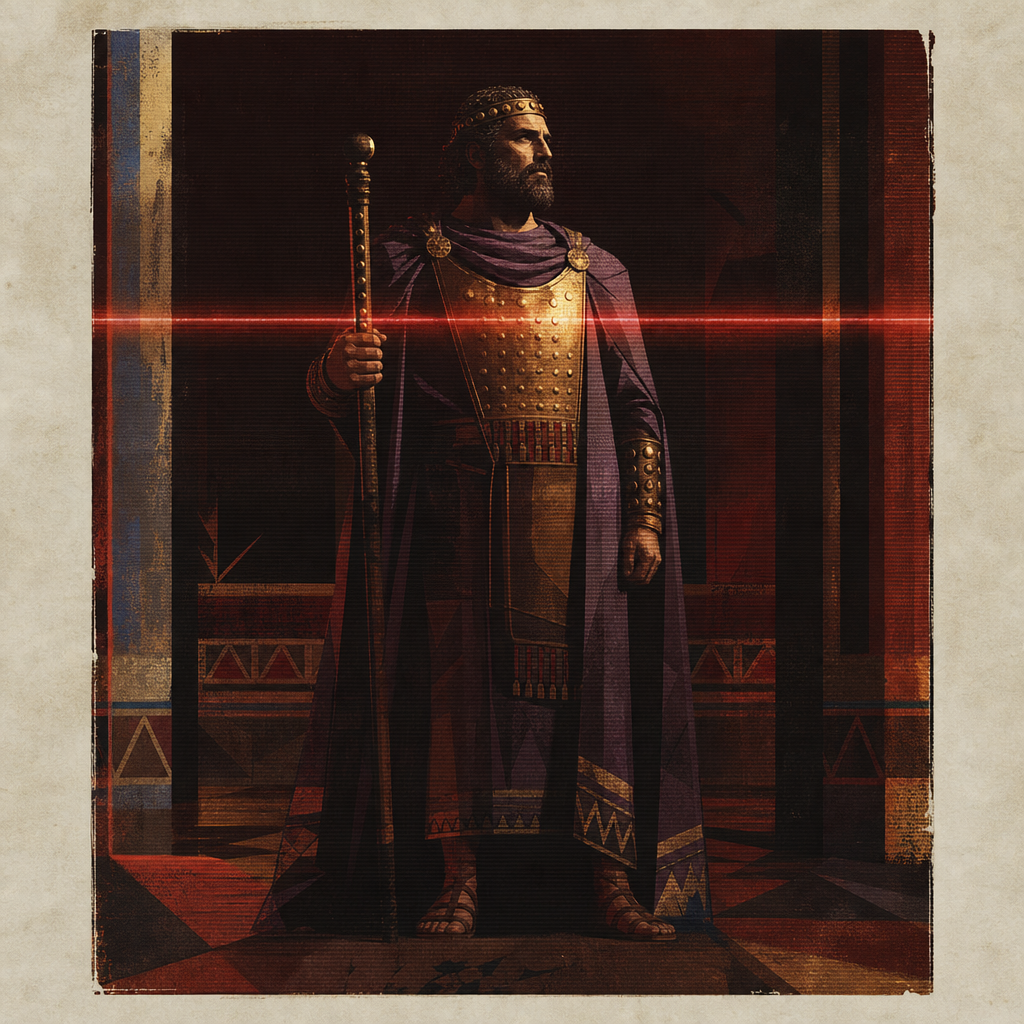
Dawn rose from her bed beside noble Tithonus to bring light to immortals and to mortal men. But Zeus sent cruel Strife down to the Achaeans' swift ships, holding the portent of war in her hands. She took her stand on Odysseus' huge-hulled black ship, which lay at the very center so a shout could carry both ways—both to the shelters of Ajax, son of Telamon, and to those of Achilles, since those two had drawn up their balanced ships at the far ends of the line, trusting in their courage and the strength of their hands. Standing there, the goddess let out a great, terrible, high-pitched cry, and into the heart of every Achaean she drove fierce strength to wage war and fight without ceasing. At once war became sweeter to them than returning in their hollow ships to their dear native land.
Read Ancient Greek Source (Iliad.11.1–Iliad.11.14)
The son of Atreus shouted aloud and ordered the Argives to arm themselves, while he himself put on his dazzling bronze. First he fastened fine greaves around his shins, fitted with silver ankle-clasps. Next he put on his chest the breastplate that Cinyras had once given him as a guest-gift; for great news had reached Cyprus that the Achaeans were about to set sail for Troy in their ships, and so Cinyras gave it to him to win the king's favor. On it were ten bands of dark blue enamel, twelve of gold, and twenty of tin; and dark blue serpents stretched up toward the neck, three on either side, like rainbows that the son of Cronus has set fast in a cloud as a sign for mortal men.
Read Ancient Greek Source (Iliad.11.15–Iliad.11.28)
Around his shoulders he slung his sword: golden studs gleamed on its hilt, while the sheath about the blade was silver, fitted with golden carrying-straps. Then he took up his fierce, richly worked, man-sheltering shield, a fine one rimmed with ten circles of bronze. Set upon it were twenty bosses of gleaming white tin, and in the middle of them was one of dark blue enamel. Crowning the shield was the grim-faced Gorgon, glaring terribly, and around her were Terror and Rout. From the shield hung a silver strap, and across it coiled a dark blue serpent with three heads turned every way, growing from a single neck. Upon his head he set his two-ridged, four-bossed helmet with its horsehair crest, and the plume nodded terribly from above. He seized two strong, sharp spears tipped with bronze, and the bronze flashed far from him up into the sky; and Athena and Hera thundered in answer, honoring the king of gold-rich Mycenae.
Read Ancient Greek Source (Iliad.11.29–Iliad.11.46)
Then each man commanded his own charioteer to hold his horses there in good order by the ditch, while they themselves, on foot and armed in their gear, surged out; and an unquenchable cry rose in the early dawn. They formed their ranks at the ditch well ahead of the charioteers, while the charioteers followed a short distance behind. Among them the son of Cronus stirred up grim turmoil, and from on high out of the upper sky he sent down dewdrops soaked with blood, because he was about to hurl many strong heads down to Hades.
Read Ancient Greek Source (Iliad.11.47–Iliad.11.55)
On the other side, the Trojans formed up on the rising ground of the plain around great Hector and faultless Polydamas, and Aeneas, who was honored like a god among the Trojan people, and the three sons of Antenor: Polybus, noble Agenor, and young, unmarried Acamas, who looked like the immortals. Hector among the foremost carried his well-balanced shield. And just as a baneful star shines out from the clouds, blazing brightly, and then plunges back into the shadowy clouds, so Hector appeared now among the front ranks and now among the rearmost, shouting orders; and all over he shone with bronze like the lightning of father Zeus who bears the aegis.
Read Ancient Greek Source (Iliad.11.56–Iliad.11.66)
And as reapers facing one another drive their swaths across a wealthy man's field of wheat or barley, and the cut handfuls fall thick and fast, so Trojans and Achaeans leaped upon one another and cut men down, and neither side thought of ruinous flight. The battle held their heads level, and like wolves they raged on; and Strife, bringer of many groans, rejoiced as she watched. For she alone of the gods was present beside the fighting men; the other gods were not among them, but sat at ease in their own halls, where a fair house had been built for each along the folds of Olympus. All of them blamed the dark-clouded son of Cronus because he wished to grant glory to the Trojans. Yet the Father paid no heed to them; withdrawing apart from the others, he sat alone, exulting in his glory, looking down on the city of the Trojans and the ships of the Achaeans, the flash of bronze, and men killing and being killed.
Read Ancient Greek Source (Iliad.11.67–Iliad.11.83)
So long as it was morning and the sacred day was growing, the weapons of both sides struck home and the men kept falling. But at the hour when a woodcutter prepares his meal in the mountain glens—when his hands have had their fill of felling tall trees, weariness comes over his spirit, and longing for sweet food seizes his heart—then by their own valor the Danaans broke the battalions, shouting to their comrades down the ranks. Agamemnon charged out first among them and killed a man, Bianor, shepherd of the people, the lord himself, and then his comrade Oileus, driver of horses. Oileus had leaped down from the chariot and stood to face him; as he charged straight ahead, Agamemnon stabbed him right in the forehead with his sharp spear. The helmet's heavy bronze rim did not stop the shaft, which drove through both helmet and bone, and all the brain inside was spattered; so he cut him down in his rush. And Agamemnon, lord of men, left them there with their bare chests gleaming after he had stripped off their tunics.
Read Ancient Greek Source (Iliad.11.84–Iliad.11.100)
Then he went on to slay Isus and Antiphus, two sons of Priam, one bastard and one legitimate, riding together in a single chariot: the bastard son held the reins, while famed Antiphus fought beside him. Once on the spurs of Ida, Achilles had caught the two of them herding sheep, bound them with pliant willow shoots, and released them for a ransom. Now the son of Atreus, wide-ruling Agamemnon, struck Isus in the chest above the nipple with his spear, and struck Antiphus by the ear with his sword, hurling him from the chariot. In haste he stripped the fine armor from them both, recognizing who they were; for he had seen them before beside the swift ships when swift-footed Achilles brought them down from Ida. And just as a lion comes to the lair of a swift doe and easily crushes her helpless fawns, gripping them in his mighty jaws and robbing them of their tender life—and the mother, even if she happens to be very near, cannot help them, for a terrible trembling seizes her too, and at once she darts away through the thick brush and the woods, straining and drenched in sweat before the onslaught of the mighty beast—so no one among the Trojans could save those two from destruction, for they themselves were fleeing in panic before the Argives.
Read Ancient Greek Source (Iliad.11.101–Iliad.11.121)
Next Lord Agamemnon caught Peisander and Hippolochus, steadfast in combat, the two sons of war-minded Antimachus, who above all others—after taking Alexander's gold and splendid gifts—had refused to let Helen be given back to fair-haired Menelaus. The two of them were in a single chariot, trying together to control their swift horses; for the glossy reins had slipped from their hands, and both men were thrown into panic. The son of Atreus sprang straight at them like a lion, and from the chariot the two begged for their lives: "Take us alive, son of Atreus, and accept a worthy ransom! Many treasures lie stored in the house of Antimachus—bronze and gold and iron forged with much labor; from these our father would gladly give you a boundless ransom if he heard that the two of us were alive beside the ships of the Achaeans."
Read Ancient Greek Source (Iliad.11.122–Iliad.11.135)
So the two of them wept and spoke to the king with soothing words, but pitiless was the voice they heard: "If indeed you two are the sons of war-minded Antimachus, who once in the assembly of the Trojans urged that Menelaus, when he came as an envoy with godlike Odysseus, be killed on the spot and never let go back to the Achaeans, now you will pay for your father's shameful outrage." He spoke, and dashed Peisander from the chariot to the ground, striking him in the chest with his spear, and he crashed flat on his back upon the earth. Hippolochus leaped down, and him he slaughtered on the ground, slashing off his arms with the sword and hacking through his neck, and sent him rolling like a cylindrical mortar through the throng.
Read Ancient Greek Source (Iliad.11.136–Iliad.11.147)
Then he left them there, and wherever the thickest ranks were churning in rout, there he plunged in, and with him the other Achaeans in fine leg armor. Foot soldiers killed foot soldiers who fled of necessity, and chariot fighters killed chariot fighters, cutting them down with bronze while the dust rose beneath them from the plain, stirred up by the thundering hooves of the horses; and Lord Agamemnon followed, relentlessly killing and shouting orders to the Argives. And as when a destructive fire falls upon a dense, uncut forest and the whirling wind carries it everywhere, while the thickets topple uprooted under the driving rush of the flames, so beneath Agamemnon, son of Atreus, fell the heads of the fleeing Trojans; and many high-necked horses rattled empty chariots along the lanes of battle, longing for their faultless drivers, who lay dead on the ground, far dearer now to vultures than to their wives.
Read Ancient Greek Source (Iliad.11.148–Iliad.11.162)
Meanwhile Zeus drew Hector out of the flying weapons and out of the dust, out of the slaughter of men, the blood, and the uproar; yet the son of Atreus pressed on, fiercely urging the Danaans forward. Past the tomb of ancient Ilus, descendant of Dardanus, the Trojans rushed across the middle of the plain, past the wild fig tree, straining to reach the city; and always shouting behind them came the son of Atreus, his invincible hands splattered with gore. When they reached the Scaean Gates and the oak tree, there they halted and waited for one another. Yet others were still fleeing in panic across the middle of the plain like cattle that a lion has stampeded, coming upon the whole herd in the dead of night, though for one beast alone sheer destruction looms: first he seizes her in his mighty jaws and breaks her neck, and then he gulps down her blood and all her entrails. Just so Lord Agamemnon, son of Atreus, harried them, always killing the last man in line while the rest fled on. Many tumbled face-first or flat on their backs from their chariots beneath the hands of Atreus' son, for out in front of all he raged with his spear.
Read Ancient Greek Source (Iliad.11.163–Iliad.11.180)
But when he was just about to reach the city and its steep wall, the father of men and gods came down from the sky and took his seat on the peaks of many-springed Ida, holding the lightning bolt in his hands. And he sent golden-winged Iris to bear his message: "Go now, swift Iris, and speak this word to Hector: so long as he sees Agamemnon, shepherd of the people, raging among the front fighters and destroying ranks of men, so long let him hold back and command the rest of the army to fight the enemy across the fierce battle. But once Agamemnon, stabbed by a spear or struck by an arrow, leaps into his chariot, then I will put strength in Hector's hands to kill until he reaches the well-benched ships, and the sun goes down and sacred darkness comes on."
Read Ancient Greek Source (Iliad.11.181–Iliad.11.194)
So he spoke, and wind-footed swift Iris did not disobey, but went down from the mountains of Ida to sacred Ilium. She found the son of war-minded Priam, brilliant Hector, standing among his horses and tightly jointed chariot; and standing close beside him, swift-footed Iris spoke: "Hector, son of Priam, peer of Zeus in counsel, Father Zeus sent me to tell you this: so long as you see Agamemnon, shepherd of the people, raging among the front fighters and destroying ranks of men, so long give way from the fighting and command the rest of the army to fight the enemy across the fierce battle. But once Agamemnon, stabbed by a spear or struck by an arrow, leaps into his chariot, then Zeus will put strength in your hands to kill until you reach the well-benched ships, and the sun goes down and sacred darkness comes on."
Read Ancient Greek Source (Iliad.11.195–Iliad.11.209)
When she had spoken thus, swift-footed Iris departed, and Hector leaped in his armor from the chariot to the ground. Brandishing his sharp spears, he went everywhere through the army, urging them to fight, and roused the terrible din of battle. The Trojans wheeled around and stood facing the Achaeans, while on the other side the Argives strengthened their battalions. The battle lines were drawn and they stood face-to-face; and among them Agamemnon charged first, eager to fight far out in front of them all.
Read Ancient Greek Source (Iliad.11.210–Iliad.11.217)
Tell me now, you Muses who have your homes on Olympus, who was the very first to come out and face Agamemnon, whether of the Trojans themselves or of their renowned allies. It was Iphidamas, Antenor's son, both brave and tall, who was raised in fertile Thrace, the mother of flocks. Cisseus reared him in his halls when he was a small child—his mother's father, who sired fair-cheeked Theano. When Iphidamas reached the full measure of glorious manhood, Cisseus tried to keep him there and gave him his own daughter in marriage; but fresh from the bridal chamber, he went after the report of the Achaeans' coming with twelve curved ships that followed him. Those balanced ships he left behind at Percote, while he himself came on foot to Ilium; and now he came out to face Agamemnon, son of Atreus.
Read Ancient Greek Source (Iliad.11.218–Iliad.11.231)
When the two had come close, advancing on each other, the son of Atreus missed, and his spear turned aside past him; but Iphidamas lunged at the belt beneath his breastplate and stabbed, leaning his own weight into the stroke and trusting in his heavy hand. Yet he did not pierce the gleaming belt; long before that, the spearpoint met the silver and bent back like lead. Then wide-ruling Agamemnon seized the shaft in his hand and pulled it toward himself, fierce as a lion, wrenching it out of Iphidamas's grip; and he struck his neck with the sword and unstrung his limbs. So Iphidamas fell there and slept a sleep of bronze while defending his townsmen, pitifully far from the young wife he had married. He had known no joy with her, though he had given much for her: first he gave a hundred cattle, and then he promised a thousand goats and sheep together from the countless flocks that were herded for him. Then Agamemnon, son of Atreus, stripped the body and went carrying the fine armor through the crowd of Achaeans.
Read Ancient Greek Source (Iliad.11.232–Iliad.11.247)
When Coon, conspicuous among men, Antenor's eldest son, saw him, crushing grief veiled his eyes for his fallen brother. He stood off to the side with his spear, unseen by brilliant Agamemnon, and stabbed him in the middle of the arm below the elbow, and the point of the shining spear drove clean through. Then Agamemnon, lord of men, shuddered; yet even so he did not break off from battle and war, but rushed at Coon holding his wind-toughened spear. Coon was eagerly dragging Iphidamas, his brother born of the same father, by the foot, and shouting to all the bravest men; but as he dragged him through the press, Agamemnon thrust beneath his bossed shield with his bronze-tipped shaft and unstrung his limbs, then stepped up beside him and hacked off his head over Iphidamas. There the sons of Antenor, beneath the hands of the king, Atreus' son, fulfilled their fate and went down into the house of Hades.
Read Ancient Greek Source (Iliad.11.248–Iliad.11.263)
Meanwhile Agamemnon ranged along the ranks of the other men with spear and sword and great jagged stones, so long as the blood still gushed warm from his wound. But when the wound dried and the blood stopped flowing, sharp pains sank into the strong spirit of Atreus' son. And as when a sharp, piercing pang seizes a woman in labor—sent by the Eileithyiae, goddesses of hard childbirth, Hera's daughters, who hold the bitter pains of labor in their keeping—so sharp pains sank into the strong spirit of Atreus' son. He sprang into his chariot and ordered his charioteer to drive to the hollow ships, for his heart was racked with pain. And he shouted out piercingly, making himself heard by the Danaans: "Friends, leaders and counselors of the Argives, you yourselves must now ward off from the seafaring ships the harsh din of battle, since counseling Zeus has not allowed me to fight the Trojans all day long." So he spoke, and his charioteer lashed the sleek-maned horses toward the hollow ships, and the pair flew willingly on; their chests were flecked with foam and their bellies spattered with dust beneath, as they carried the stricken king away from the fighting.
Read Ancient Greek Source (Iliad.11.264–Iliad.11.283)
When Hector saw Agamemnon departing from the field, he called out to the Trojans and Lycians with a loud shout: "Trojans, Lycians, and Dardanians who fight hand-to-hand, be men, my friends, and remember your furious valor! Their best man is gone, and to me great glory has been granted by Zeus, son of Cronus. Drive your solid-hoofed horses straight at the mighty Danaans, so that you may win higher glory!" So speaking, he stirred the strength and spirit of every man. As when some hunter sets his white-fanged hounds upon a wild boar or a lion, so Hector, Priam's son, the equal of man-slaughtering Ares, drove the great-hearted Trojans against the Achaeans. He himself strode among the foremost in high confidence, and plunged into the fray like a hurricane blowing from above that leaps down and churns the violet-dark sea.
Read Ancient Greek Source (Iliad.11.284–Iliad.11.298)
Then whom first, and whom last, did Hector, son of Priam, slaughter when Zeus granted him glory? Asaeus first, and Autonous, and Opites, and Dolops, son of Clytius, and Opheltius and Agelaus, and Aesymnus, Orus, and Hipponous, steadfast in fight. These leaders of the Danaans he killed, and after them the multitude—as when the West Wind batters the clouds of the brightening South Wind, lashing them with a heavy squall, and many a swollen wave rolls on, while high in the air the spindrift scatters before the blast of the gusting wind: so thick and fast the heads of the soldiery went down beneath Hector.
Read Ancient Greek Source (Iliad.11.299–Iliad.11.309)
Then ruin would have come and irreparable deeds been done, and the fleeing Achaeans would have been tumbled among their ships, had not Odysseus called out to Diomedes, son of Tydeus: "Son of Tydeus, what has come over us that we forget our furious valor? Come here, old friend, stand by me; it will be a disgrace if Hector of the flashing helmet takes the ships." Strong Diomedes answered him: "I will indeed stand my ground and endure; yet short-lived will be our advantage, since cloud-gathering Zeus clearly wills to give victory to the Trojans rather than to us."
Read Ancient Greek Source (Iliad.11.310–Iliad.11.319)
He spoke, and hurled Thymbraeus from his chariot to the ground, striking him with his spear in the left breast; and Odysseus brought down Molion, that lord's godlike attendant. They left those two where they lay, now that they had ended their fighting; then the pair charged through the press spreading havoc, as when two boars in fierce pride fall upon the hunting hounds: so they turned back to the attack and slaughtered Trojans, while the Achaeans, escaping from brilliant Hector, gladly caught their breath. Next they took a chariot and two men, the best of their people, the two sons of Merops of Percote, who beyond all men knew the art of prophecy and would not let his own sons march to man-destroying war; yet the two would not obey him at all, for the fates of black death were leading them on. Spear-famed Diomedes, son of Tydeus, robbed those two of spirit and life and stripped away their famous armor, while Odysseus killed and stripped Hippodamus and Hypeirochus.
Read Ancient Greek Source (Iliad.11.320–Iliad.11.335)
Then the son of Cronus pulled the battle taut and even for both sides as he looked down from Ida, and they slaughtered one another. Now the son of Tydeus stabbed the hero Agastrophus, Paeon's son, in the hip with his spear. His horses were not near at hand for him to escape, for he had made a fatal blunder in his heart: his attendant was holding them far back, while he himself charged on foot through the front fighters until he lost his life. Hector spotted this sharply across the ranks and surged toward them with a war cry, and the Trojan battalions followed right behind him. Seeing him, Diomedes of the strong war cry shuddered, and at once he called out to Odysseus, who was close by: "Upon the two of us this ruin comes rolling—mighty Hector! Come, let us stand firm, hold our ground, and ward him off."
Read Ancient Greek Source (Iliad.11.336–Iliad.11.348)
So he spoke, and poising his long-shadowed spear he hurled it. Aiming at the head, he struck the top of the helmet and did not miss; yet bronze glanced off bronze and did not reach his fair skin, for it was stopped by the three-layered, visored helmet that Phoebus Apollo had given him. Hector quickly darted back a great distance and mingled with the throng; he dropped to his knees and braced his heavy hand against the earth, and black night veiled both his eyes. While the son of Tydeus went after the flight of his spear far through the front fighters, to the spot where it had sunk into the ground, Hector caught his breath, sprang back into his chariot, and drove out into the crowd, escaping black death. Rushing forward with his spear, strong Diomedes shouted after him: "Once again now you have escaped death, dog! Truly ruin came close upon you, but once more Phoebus Apollo has saved you, to whom you surely pray whenever you go into the crash of javelins. I will surely finish you off when I meet you next time, if any of the gods is a helper to me as well. For now I will go after the rest, whomever I can catch." So he spoke, and set to stripping the spear-famed son of Paeon.
Read Ancient Greek Source (Iliad.11.349–Iliad.11.368)
Meanwhile Alexander, husband of lovely-haired Helen, was bending his bow at the son of Tydeus, shepherd of the people, leaning against the stone pillar on the burial mound raised by men for Ilus, descendant of Dardanus, an ancient elder of the people. While Diomedes was stripping the gleaming breastplate of mighty Agastrophus from his chest, the shield from his shoulders, and the heavy helmet, Alexander drew back the arch of his bow and shot—and the shaft did not fly in vain from his hand. He struck the flat of Diomedes' right foot, and the arrow drove clean through and pinned itself in the earth. Laughing with sweet delight, Alexander leaped up from his ambush and shouted in triumph: "You are hit, and my shaft did not fly in vain! How I wish I had struck you low in the belly and torn the life out of you! Then the Trojans would have caught their breath from misery, who shudder before you as bleating goats shudder at a lion."
Read Ancient Greek Source (Iliad.11.369–Iliad.11.383)
Without a trace of fear, strong Diomedes answered him: "Bowman, foul-mouthed disgrace, proud of your horn bow, ogler of girls! If you tried me face-to-face in full armor, your bow and your showers of arrows would not save you; yet now, because you grazed the flat of my foot, you boast for nothing. I care no more than if a woman had hit me, or a witless child, for blunt is the shaft of a cowardly, worthless man. It is another thing altogether from my hand: even if it barely grazes, the weapon is sharp and strikes a man dead on the spot. Both cheeks of his wife are torn in grief, his children are orphaned, and reddening the earth with his blood he rots, with more birds of prey around him than women." So he spoke, and spear-famed Odysseus came up close and stood in front of him; sitting down behind him, Diomedes pulled the swift arrow out of his foot, and a piercing pain shot through his flesh. Then he sprang into his chariot and ordered his driver to drive back to the hollow ships, for he was anguished at heart.
Read Ancient Greek Source (Iliad.11.384–Iliad.11.400)
Now spear-famed Odysseus was left alone, and not one of the Argives stayed beside him, since panic had gripped them all. Groaning deeply, he spoke to his own great-hearted spirit: "Ah me, what is to become of me? It is a great evil if I run in fear of the crowd; yet it is worse still if I am caught all alone, now that the son of Cronus has routed the rest of the Danaans. But why does my own heart debate these things with me? I know that cowards walk away from war, while the man who excels in battle must by all means stand his ground hard and fast, whether he is struck or strikes another."
Read Ancient Greek Source (Iliad.11.401–Iliad.11.410)
While he was turning these things over in his mind and heart, the ranks of shield-bearing Trojans came on and hemmed him in their midst, penning their own ruin among themselves. And as hounds and vigorous young hunters press around a wild boar as he comes out from a deep thicket, whetting his white tusk between his curved jaws, and they dart in from every side while the clatter of his tusks rises from beneath, yet they stand their ground at once, terrible though he is—just so the Trojans rushed around Odysseus, dear to Zeus. First he leaped in and stabbed faultless Deiopites in the shoulder from above with his sharp spear, and next he killed and stripped Thoon and Ennomus. Then, as Chersidamas sprang down from his chariot, Odysseus thrust his spear into his belly at the navel beneath the bossed shield; he fell in the dust and clutched the earth in his palm.
Read Ancient Greek Source (Iliad.11.411–Iliad.11.425)
Leaving those men where they lay, he stabbed Charops, son of Hippasus, with his spear—the full brother of wealthy Socus. Socus, a godlike man, came to defend him; advancing very close, he stood and spoke to him: "Much-praised Odysseus, insatiable in tricks and toil, today either you will boast over both sons of Hippasus, having killed two such men and stripped their armor, or else, struck down by my spear, you will lose your life."
Read Ancient Greek Source (Iliad.11.426–Iliad.11.433)
So speaking, he struck him on his well-balanced shield. The heavy spear drove through the shining shield and forced its way through the richly worked breastplate, tearing all the skin away from his ribs; yet Pallas Athena did not let it pierce the man's vital organs. Odysseus knew that the blow had not struck a fatal spot, and stepping back he spoke to Socus: "Poor wretch, sheer destruction has surely caught up with you. True, you have stopped me from fighting against the Trojans; but for you, I say slaughter and black death will come right here today, and brought down beneath my spear you will give glory to me and your soul to Hades of the famed horses."
Read Ancient Greek Source (Iliad.11.434–Iliad.11.445)
He spoke, and Socus had already turned back in flight; as he turned, Odysseus drove his spear into his back between the shoulders and rammed it through his chest. He fell with a thud, and brilliant Odysseus boasted over him: "Socus, son of war-minded, horse-taming Hippasus, death was too quick for you and caught you—you did not escape. Poor wretch, your father and honored mother will not close your eyes in death; instead, raw-flesh-eating birds will tear you apart, beating their thick wings around you. Whereas for me, if I die, the noble Achaeans will give me funeral honors." So speaking, he pulled the heavy spear of war-minded Socus out of his flesh and out of his bossed shield; as it was drawn out, his blood gushed forth and distressed his spirit.
Read Ancient Greek Source (Iliad.11.446–Iliad.11.458)
When the great-hearted Trojans saw Odysseus' blood, they called to one another through the crowd and all charged at him together. He backed away step by step and shouted to his comrades. Three times he shouted as loudly as a man can shout, and three times Menelaus, dear to Ares, heard him crying out. At once he spoke to Ajax, who was nearby: "Ajax, Zeus-born son of Telamon, lord of the people, the cry of stout-hearted Odysseus has reached my ears, sounding as though the Trojans have cut him off in the fierce battle and are overpowering him all alone. Come, let us push through the press; it is better to defend him. I fear some harm may befall him, left alone among the Trojans, brave though he is, and the Danaans would feel a great loss."
Read Ancient Greek Source (Iliad.11.459–Iliad.11.471)
So speaking, he led the way, and the godlike man followed with him. Then they found Odysseus, dear to Zeus, and around him the Trojans were pressing like tawny jackals in the mountains around a wounded horned stag that a man has struck with an arrow from the bowstring: the stag escapes the hunter on its feet, fleeing so long as its blood is warm and its knees keep moving; but once the swift arrow overpowers it, raw-flesh-eating jackals tear it apart in the mountains in a shadowy glade—and then a god brings a marauding lion upon them, and the jackals scatter in terror while the lion devours the prey. Just so, many brave Trojans were pressing around war-minded Odysseus of the many counsels, while the hero lunged out with his spear and warded off the pitiless day of death. Then Ajax came up close, carrying his shield like a tower, and stood forth beside him; and the Trojans scattered in terror this way and that. Warlike Menelaus led Odysseus out of the press, holding him by the hand, until his attendant drove the horses up close.
Read Ancient Greek Source (Iliad.11.472–Iliad.11.488)
Ajax leaped upon the Trojans and killed Doryclus, a bastard son of Priam; next he stabbed Pandocus, and stabbed Lysander and Pyrasus and Pylartes. And as when a winter-swollen river comes sweeping down to the plain from the mountains, driven on by the rain of Zeus, and carries with it many dry oaks and many pines, and casts a great mass of drift-mud into the sea, so glorious Ajax then swept across the plain spreading rout, hacking down horses and men. Nor had Hector yet heard of it, since he was fighting on the far left of the whole battle along the banks of the river Scamander, where the heads of men were falling thickest and an unquenchable cry had risen around great Nestor and warlike Idomeneus. Hector was in the thick of the fray among them, doing grim work with his spear and his horsemanship, and devastating the ranks of young fighters.
Read Ancient Greek Source (Iliad.11.489–Iliad.11.503)
Even so, the noble Achaeans would not yet have given way from their path, had not Alexander, husband of lovely-haired Helen, stopped Machaon, shepherd of the people, in the midst of his prowess, striking him on the right shoulder with a three-barbed arrow. Then the Achaeans, breathing fury, were seized with fear for him, lest the Trojans take him if the tide of battle turned. At once Idomeneus spoke to noble Nestor: "Nestor, son of Neleus, great glory of the Achaeans, come, mount your chariot, and let Machaon step in beside you, and drive your solid-hoofed horses with all speed to the ships. For a healer is a man worth many others at cutting out arrows and spreading soothing medicines on wounds." So he spoke, and the Gerenian horseman Nestor did not disobey. At once he mounted his chariot, and Machaon stepped in beside him, the son of the faultless healer Asclepius. He lashed the horses, and the pair flew willingly toward the hollow ships, for that was where their hearts wished to go.
Read Ancient Greek Source (Iliad.11.504–Iliad.11.520)
Meanwhile Cebriones, standing beside Hector in the chariot, saw the Trojans being driven in rout and spoke to him: "Hector, the two of us are fighting the Danaans here on the far edge of the harsh-roaring battle, while the rest of the Trojans are being routed in confusion, horses and men together. Ajax, son of Telamon, is driving them in panic; I know him well, for he carries his broad shield about his shoulders. Let us too steer our horses and chariot there, where chariot fighters and foot soldiers above all have flung forth evil strife and are slaughtering one another, and an unquenchable cry has risen."
Read Ancient Greek Source (Iliad.11.521–Iliad.11.530)
With these words he lashed the sleek-maned horses with his whistling whip. Feeling the stroke, they swiftly bore the fast chariot among the Trojans and Achaeans, trampling corpses and shields. Beneath, the whole axle was spattered with blood, and so were the rails around the chariot box, struck by drops flying from the horses' hooves and from the wheel-rims. Hector was straining to plunge into the press of men, leap among them, and break their line; he brought grim turmoil upon the Danaans, and gave little rest to his spear. Through the ranks of the other men he ranged with spear and sword and great jagged stones, yet he avoided battle with Ajax, son of Telamon.
Read Ancient Greek Source (Iliad.11.531–Iliad.11.542)
But Father Zeus, enthroned on high, stirred fear in Ajax. He stood dazed, slung his seven-hide shield behind his back, and gave ground, glancing warily toward the crowd like a wild beast, turning around again and again and moving one knee slowly past the other. As when hounds and country men drive a tawny lion from the courtyard of their cattle, keeping watch all night long and not letting him seize the fattest of the herd; craving meat, he charges straight in, yet accomplishes nothing, for javelins fly thick and fast to meet him from daring hands along with blazing torches, which make him flinch back despite his fury, and at dawn he goes away with a heavy heart—so Ajax then drew back from the Trojans, sick at heart and deeply unwilling, for he feared greatly for the ships of the Achaeans.
Read Ancient Greek Source (Iliad.11.544–Iliad.11.557)
And as when a stubborn donkey walking past a grainfield overpowers the boys driving him—a beast over whose sides many clubs have already been broken—and goes in and crops the deep standing grain, while the boys beat him with their sticks, though their strength is slight, and only with difficulty drive him out once he has had his fill of fodder; so then the proud Trojans and their allies gathered from many lands kept pressing after great Ajax, son of Telamon, stabbing the center of his shield with their polished lances. At times Ajax would wheel back around, remembering his furious valor, and hold off the battalions of the horse-taming Trojans; at other times he would turn again in retreat. Yet he blocked them all from making their way to the swift ships, as he himself stood and raged between the Trojans and the Achaeans; and of the spears thrown from daring hands, some drove forward and stuck fast in his great shield, while many others between the lines, before they could reach his white skin, stood fixed in the earth, hungering to glut themselves on flesh.
Read Ancient Greek Source (Iliad.11.558–Iliad.11.574)
When the splendid son of Euaemon, Eurypylus, saw him being overpowered by the thick hail of weapons, he came and stood beside him, cast his shining spear, and struck Apisaon, son of Phausius, shepherd of the people, in the liver beneath the midriff, and at once unstrung his knees beneath him. Eurypylus sprang forward and began stripping the armor from his shoulders. But when godlike Alexander saw him stripping Apisaon's armor, he immediately drew his bow at Eurypylus and shot him with an arrow in the right thigh; the reed shaft snapped off and weighed down his thigh. Eurypylus drew back into the company of his comrades to escape death, and shouted out piercingly, making himself heard by the Danaans: "Friends, leaders and counselors of the Argives, wheel around, stand firm, and ward off the pitiless day of death from Ajax! He is being overpowered by weapons, and I do not think he will escape from the harsh-roaring battle. Stand face-to-face around great Ajax, son of Telamon!" So spoke wounded Eurypylus; and they stood close beside him, bracing their shields against their shoulders and holding their spears aloft. Ajax came to meet them, and once he reached the company of his comrades, he turned around and stood fast.
Read Ancient Greek Source (Iliad.11.575–Iliad.11.595)
So they fought on like blazing fire. Meanwhile the Nelean mares, drenched in sweat, were carrying Nestor out of the battle and bringing Machaon, shepherd of the people. Swift-footed, brilliant Achilles saw and noticed him; for he was standing on the stern of his huge-hulled ship, watching the sheer toil of battle and the tearful rout. At once he called out from the ship to his comrade Patroclus; and hearing him from inside the shelter, Patroclus came out like Ares—and that was the beginning of his ruin. The brave son of Menoetius spoke to him first: "Why do you call me, Achilles? What do you need of me?" Swift-footed Achilles answered him: "Noble son of Menoetius, dear to my heart, now I think the Achaeans will stand around my knees in supplication, for a need has come upon them that can no longer be borne. But go now, Patroclus, dear to Zeus, and ask Nestor who this wounded man is that he is bringing out of the fighting. From behind, he looks in every way like Machaon, son of Asclepius, but I did not see the man's face, for the mares flashed past me straining forward." So he spoke, and Patroclus obeyed his dear comrade and set off running past the shelters and the ships of the Achaeans.
Read Ancient Greek Source (Iliad.11.596–Iliad.11.617)
When Nestor and Machaon reached the shelter of Neleus' son, they stepped down onto the bounteous earth, and the old man's attendant Eurymedon unhitched the mares from the chariot. The two men stood facing the breeze along the seashore to cool the sweat from their tunics, and then went into the shelter and sat down on chairs. For them Hecamede with her lovely braids, the daughter of great-hearted Arsinous, prepared a mixed drink—the old man had won her from Tenedos when Achilles sacked it, as the Achaeans had chosen her out for him because he excelled all men in counsel. First she set before the two a fine, well-polished table with feet of dark blue enamel, and on it a bronze basket with an onion as a relish for the drink, pale honey, and beside it sacred barley meal; and beside that she set a magnificent cup that the old man had brought from home, studded with golden nails. There were four handles on it, and around each handle two golden doves were feeding, and beneath it were two bases. Another man could barely move it from the table when it was full, but old Nestor lifted it without effort. In it the woman, like a goddess, mixed the drink for them with Pramnian wine; over it she grated goat's cheese with a bronze grater and sprinkled white barley meal on top, and once she had prepared the drink, she invited them to drink. When the two had drunk and driven away their parching thirst, they took pleasure in speaking with one another.
Read Ancient Greek Source (Iliad.11.618–Iliad.11.643)
Just then Patroclus, a godlike man, stood in the doorway. Seeing him, the old man rose from his shining chair, took him by the hand, led him in, and urged him to sit down. But from where he stood Patroclus refused and said: "There is no time to sit, Zeus-nurtured elder, and you will not persuade me. Revered and quick to anger is the man who sent me to find out who this wounded man is that you are bringing in; yet I recognize him for myself, and I see that he is Machaon, shepherd of the people. Now I must go back as a messenger to tell Achilles. You know well yourself, Zeus-nurtured elder, what a formidable man he is: he might quickly blame even a man who is blameless."
Read Ancient Greek Source (Iliad.11.644–Iliad.11.654)
Then the Gerenian horseman Nestor answered him: "Why then does Achilles grieve like this for the sons of the Achaeans who have been struck by missiles? He knows nothing at all of the sorrow that has risen throughout the camp; for our best men lie among the ships, hit from afar or stabbed at close quarters. The son of Tydeus, strong Diomedes, has been shot; spear-famed Odysseus has been stabbed, and Agamemnon too; Eurypylus as well has been shot in the thigh with an arrow; and this is still another man I have just now brought out of the battle, struck by an arrow from the bowstring. Yet Achilles, brave though he is, neither cares for the Danaans nor pities them. Is he waiting until the swift ships near the sea are burned with consuming fire against the Argives' will, and we ourselves are killed one after another? For my strength is no longer what it once was in my supple limbs.
Read Ancient Greek Source (Iliad.11.655–Iliad.11.669)
"If only I were as young and my strength were as steady as when a quarrel broke out between the Eleans and us over a cattle raid, when I was driving off livestock in reprisal and killed Itymoneus, the brave son of Hypeirochus, who lived in Elis. As he fought to defend his cattle, he was struck among the foremost by a javelin from my hand; down he fell, and his country folk scattered in terror around him. From the plain we drove off a vast plunder together: fifty herds of cattle, as many flocks of sheep, as many droves of pigs, as many wide-ranging herds of goats, and a hundred and fifty chestnut horses, all of them mares, and many with foals running beneath them. These we drove by night into Nelean Pylos, to the city; and Neleus rejoiced in his heart that so much spoil had fallen to me when I went to war as a youth.
Read Ancient Greek Source (Iliad.11.670–Iliad.11.684)
"At the first light of dawn, heralds called out clearly for all men to come who were owed a debt in sacred Elis; and the leading men of the Pylians gathered and divided the spoils. For the Epeians owed debts to many, since we in Pylos were few and had been brought low: in earlier years the mighty Heracles had come and battered us, and all our best men had been killed. Twelve sons we were of faultless Neleus, and of them I alone was left, while all the rest perished. Growing arrogant over this, the bronze-armored Epeians insulted us and contrived reckless outrages. So the old man chose out for himself a herd of cattle and a great flock of sheep—picking three hundred head along with their herdsmen—for a great debt was owed to him too in sacred Elis: four prize-winning horses, chariot and all, that had gone to the games. They were to run for a tripod, but Augeas, lord of men, held them back right there and sent the driver away grieving for his horses. Angered by those words and deeds, the old man chose out a vast share for himself, and gave the rest to the people to divide, so that no man would go away cheated of a fair share.
Read Ancient Greek Source (Iliad.11.685–Iliad.11.705)
"We attended to each of these matters and offered sacrifices to the gods around the city. On the third day the Epeians came in full force, a great host of men and solid-hoofed horses together; and among them the two Moliones armed themselves, though they were still boys and not yet well versed in furious valor. There is a city, Thryoessa, perched on a steep hill far off on the Alpheus, the farthest town of sandy Pylos; around it they encamped, eager to raze it. But when they had crossed the whole plain, Athena came running down from Olympus by night as a messenger to bid us arm, and the people she mustered throughout Pylos were not unwilling, but fiercely eager for war. Neleus would not let me arm myself, and hid my horses away from me, for he said I did not yet know the work of war. Yet even so I stood out among our chariot fighters, though I was on foot, since Athena guided the battle that way. There is a river, the Minyeius, that empties into the sea near Arene, and there we Pylian chariot fighters waited for bright Dawn while the companies of foot soldiers streamed in to join us. From there, armed in our gear, we marched in full force and at midday reached the sacred stream of the Alpheus. There we offered fine sacrifices to almighty Zeus, a bull to the Alpheus and a bull to Poseidon, and a heifer from the herd to bright-eyed Athena; then we took our supper in our squadrons throughout the camp and lay down to sleep, each man in his own armor, along the river's currents. Meanwhile the great-hearted Epeians were massed around the town, eager to raze it; but before they could do so, a great work of Ares appeared before them. For as soon as the shining sun rose above the earth, we clashed in battle, praying to Zeus and Athena.
Read Ancient Greek Source (Iliad.11.706–Iliad.11.736)
"When the clash between the Pylians and the Epeians began, I was the first to kill a man, the spearman Mulius, and carry off his solid-hoofed horses. He was the son-in-law of Augeas and was married to his eldest daughter, fair-haired Agamede, who knew every drug the wide earth grows. As he came on, I struck him with my bronze-tipped spear, and he fell in the dust; then I leaped into his chariot and took my stand among the front fighters. The great-hearted Epeians scattered in terror this way and that when they saw the man fall—the leader of their chariot fighters, who excelled in battle. I swept after them like a black whirlwind and captured fifty chariots, and around each one two men bit the earth with their teeth, brought down beneath my spear. And now I would have cut down the two young Moliones, the sons of Actor, had not their father, the wide-ruling Earth-Shaker, saved them out of the battle by wrapping them in thick mist. Then Zeus granted great victory to the Pylians; for we chased them across the wide plain, killing the men and gathering up their fine armor, until we drove our horses to wheat-rich Buprasium and the Olenian Rock, and the place called the Hill of Alesium, from which Athena turned our people back. There I killed the last man and left him; and the Achaeans drove their swift horses back from Buprasium to Pylos, and all gave glory to Zeus among the gods and to Nestor among men. Such a man I was among men, if indeed I ever was. But Achilles alone will have the profit of his valor; truly I think he will weep bitterly when it is too late, once the army has been destroyed.
Read Ancient Greek Source (Iliad.11.737–Iliad.11.764)
"My friend, surely Menoetius gave you this charge on the day he sent you from Phthia to join Agamemnon; and the two of us who were inside—noble Odysseus and I—heard every word in the halls as he charged you. For we had come to the well-settled house of Peleus while gathering an army throughout fertile Achaea. There inside we found the hero Menoetius and you, and Achilles beside you; and the old horseman Peleus was burning the fat thigh-pieces of an ox to Zeus who delights in thunder in the enclosure of the courtyard, holding a golden cup and pouring gleaming wine over the burning offerings. The two of you were busy with the ox's meat when we stood in the gateway. Achilles sprang up in surprise, took us by the hand, led us in, and urged us to sit down, and set before us generous hospitality, as is right for guests. When we had taken our fill of food and drink, I began to speak, urging you both to come with us; the two of you were very eager, and both fathers gave you many instructions. Old Peleus charged his son Achilles always to excel and stand above all others; and to you Menoetius, son of Actor, gave this charge: 'My child, by birth Achilles is higher than you, though you are the elder; and in strength he is far the better man. Yet speak wise words to him, advise him well, and guide him; and he will obey you for his own good.'
Read Ancient Greek Source (Iliad.11.765–Iliad.11.789)
"So the old man charged you, yet you forget. Still, even now, speak these things to war-minded Achilles, in the hope that he may listen. Who knows whether, with a god's help, you might stir his spirit by speaking to him? A comrade's persuasion is a good thing. And if in his heart he is shunning some prophecy, and his honored mother has told him some word from Zeus, at least let him send you out, and let the rest of the Myrmidon host follow with you, so that you may bring some light of deliverance to the Danaans. Let him also give you his fine armor to wear into battle, in the hope that the Trojans may take you for him and hold back from the fighting, and the warlike sons of the Achaeans, worn down as they are, may catch their breath—for in war even a brief breathing space is enough. Fresh as you are, with a war cry you could easily drive men exhausted by battle back toward the city, away from the ships and the shelters."
Read Ancient Greek Source (Iliad.11.790–Iliad.11.803)
So he spoke, and he stirred the heart in Patroclus' chest, and Patroclus set off running along the line of ships toward Achilles, descendant of Aeacus. But when in his run Patroclus reached the ships of godlike Odysseus, where their assembly place and seat of judgment were, and where the altars of their gods had also been built, there Eurypylus met him, the Zeus-born son of Euaemon, wounded in the thigh by an arrow and limping out of the battle. Wet sweat streamed down from his shoulders and head, and dark blood was bubbling from his painful wound, yet his mind remained steady. Seeing him, the brave son of Menoetius pitied him, and grieving for him spoke winged words: "Poor wretches, leaders and counselors of the Danaans, so you were destined after all, far from your friends and native land, to glut the swift dogs in Troy with your white fat! But come, tell me this, Zeus-nurtured hero Eurypylus: will the Achaeans still be able to hold back monstrous Hector, or will they perish now, brought down beneath his spear?"
Read Ancient Greek Source (Iliad.11.804–Iliad.11.821)
Wounded Eurypylus answered him: "No longer, Zeus-born Patroclus, will there be any defense for the Achaeans; instead, they will be driven back in rout among the black ships. For all those who used to be our bravest men lie among the ships, hit from afar or stabbed at close quarters by the hands of the Trojans, whose strength keeps rising higher. But save me now and lead me to my black ship; cut the arrow out of my thigh, wash the dark blood from it with warm water, and spread on it the soothing, healing medicines that they say you learned from Achilles, whom Chiron taught, the most just of the Centaurs. For as for the healers, Podalirius and Machaon, I think the one lies wounded among the shelters, needing a faultless healer himself, while the other is out on the plain holding off the fierce onslaught of the Trojans."
Read Ancient Greek Source (Iliad.11.822–Iliad.11.836)
The brave son of Menoetius answered him: "How can these things be? What shall we do, hero Eurypylus? I am on my way to deliver a message to war-minded Achilles that Gerenian Nestor, guardian of the Achaeans, charged me to bring; yet even so I will not abandon you in your distress." He spoke, and supporting the shepherd of the people beneath the chest, he led him into his shelter, and an attendant saw them and spread out oxhides. Stretching him out there, Patroclus used a knife to cut the sharp, bitter arrow from his thigh, washed the dark blood from it with warm water, and applied a bitter, pain-killing root that he crushed in his hands; it checked all his pains, the wound dried, and the blood stopped flowing.