Book 1: The Quarrel of Achilles and Agamemnon
Ἰλιάς · Book 1 · Classix 2026 Lyric-Poetic Edition
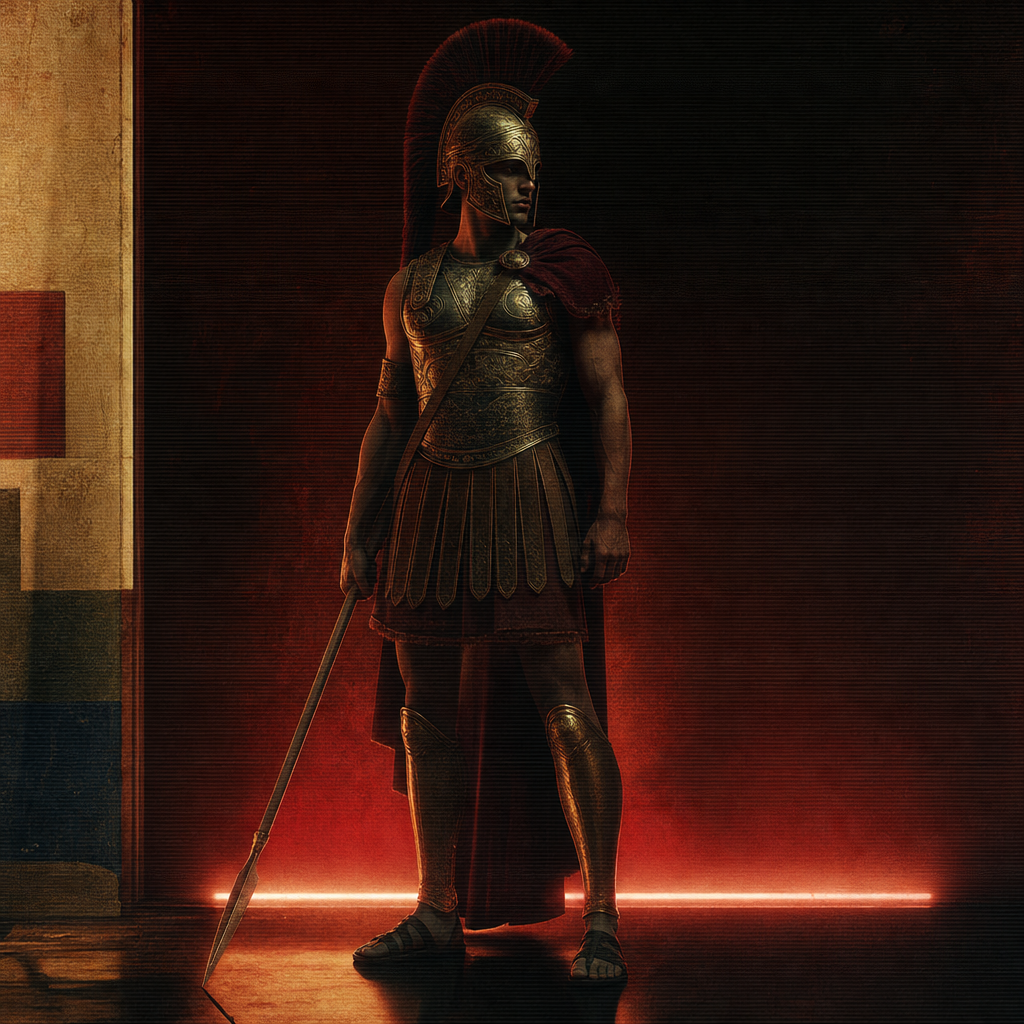
Sing, goddess, of the rage of Peleus’ son Achilles— the black-blooded fever that broke the Greek camp open, sent so many brave warriors’ souls down to Hades before their time, and left their bodies for the stray dogs and every circling bird. That was how Zeus’s design came down, from the hour those two first split the camp in half: Agamemnon, son of Atreus, high commander of the army, and brilliant Achilles.
Read Ancient Greek Source (Iliad.1.1–Iliad.1.7)
Which god struck the spark that set those two against each other? The son of Leto and Zeus: Apollo. Anger at the king made him drive a vicious sickness through the ranks. The men were dying. Atreus’ son had insulted Chryses, Apollo’s priest. Chryses had reached the Greeks’ fast ships carrying a fortune to ransom his daughter. In his hands, Apollo’s sacred ribbons hung from a staff of gold—the sign of the god whose arrows reach across the distance. He begged the whole Greek army, and most of all the two sons of Atreus, the commanders who drew those men into their ranks.
Read Ancient Greek Source (Iliad.1.8–Iliad.1.16)
“Sons of Atreus, and you other Greeks strapped into your bronze armor: may the gods whose homes stand on Olympus let you tear through Priam’s city and reach your homes alive and well. Take what I’ve brought to buy her freedom. Release my child, the daughter I love. Honor Zeus’s son, Apollo, whose arrows strike from far away.”
Read Ancient Greek Source (Iliad.1.17–Iliad.1.21)
Every other Greek called out in favor: the priest deserved respect; they should take the glittering wealth he offered. But Atreus’ son Agamemnon rejected the plea. He spat abuse at the priest and sent him off, his order hard with threat:
Read Ancient Greek Source (Iliad.1.22–Iliad.1.25)
“Old man. I’d better not find you by these hollow hulls— not hanging around today, not turning up another time. Your staff, your god’s ribbons: they might not save your skin. You’re not getting her back from me. Old age will find her in my house in Argos, a long way from the land she calls her own, moving up and down the loom, sharing my bed. Get out. Don’t push me. Leave while you can still get home safe.”
Read Ancient Greek Source (Iliad.1.26–Iliad.1.32)
The old man heard him, shook with fear, obeyed. He took the shoreline without a word; the sea kept crashing beside him. Only when he had walked far away did he pour out his prayers to Apollo, his lord, the son Leto bore, Leto with her beautiful hair:
Read Ancient Greek Source (Iliad.1.33–Iliad.1.36)
“Listen to me, silver-bow god, protector of Chryse and deeply sacred Cilla, mighty ruler of Tenedos. Smintheus— if I ever laid a roof on a temple you loved, if I ever burned you thighbones wrapped in fat, cut from bulls and goats, bring this one wish to pass: Let your arrows collect from the Greeks what they owe for these tears.”
Read Ancient Greek Source (Iliad.1.37–Iliad.1.42)
That was the old man’s prayer. And Phoebus Apollo heard him. He came down off the peaks of Olympus with murder in his chest, the silver bow slung across his shoulders, the quiver covered tight. Every angry step he took, the arrows rattled on his back. He came down like nightfall. He sat apart from the hulls and let one arrow go. The silver bow sang out—a cold, lethal ring. First the pack-mules. Then the fast camp-dogs. Then he turned the sharp point on the men themselves and kept on firing. The dead-fires crowded together, burning without going out.
Read Ancient Greek Source (Iliad.1.43–Iliad.1.52)
Nine days. The god’s arrows kept cutting through the army. On day ten, Achilles summoned the men to an assembly. Hera, her arms white, had planted that thought in him: she cared about the Greeks, and watched them die. Once the men had come together, Achilles, with his speed on foot, rose in their midst and spoke:
Read Ancient Greek Source (Iliad.1.53–Iliad.1.58)
“Son of Atreus, I think we’ll have to turn around, beaten back, and take the road for home— those of us who manage to stay alive— if war and sickness together are going to break the Greeks. Let’s get someone to tell us what this means: a prophet, a priest, someone who reads dreams. A dream can come from Zeus too. Someone must know what made Phoebus Apollo burn this fiercely against us. Is it a prayer we owe him? An offering of a hundred animals? Would he taste the smoke of burning fat from lambs and full-grown goats and lift this killing from us?”
Read Ancient Greek Source (Iliad.1.59–Iliad.1.67)
Achilles ended there and took his seat. Thestor’s son Calchas stood up, the finest reader of the flight of birds. He knew the present, knew what waited ahead, knew what had already passed. The power to see, a gift from Phoebus Apollo, had brought the Greek ships under his guidance to Troy. Now he addressed the gathering, with their good at heart:
Read Ancient Greek Source (Iliad.1.68–Iliad.1.73)
“Achilles, Zeus holds you dear. You want me to explain the fury of our lord Apollo, the god who strikes from far away. I’ll speak. But hear my terms and swear: you’ll freely come to my defense, with what you say and what your hands can do. Because I think the man I’ll anger holds immense power over every Greek. The army does what he commands. When a king turns on a man below him, the king has the strength to make him pay. He may choke his anger down today. He’ll still keep it banked inside his chest until he gets his revenge. Consider that. Will you protect me?”
Read Ancient Greek Source (Iliad.1.74–Iliad.1.83)
Achilles, so quick on his feet, replied: “Speak without fear. Give us the whole message you know from the god. By Apollo, whom Zeus loves— the god you pray to, Calchas, whose answers you make known to the Greeks— while I still breathe and look upon this earth, no one beside these hollow ships will bring his hands down hard on you. No one in the entire Greek army. You can name Agamemnon himself, who boasts that he stands far above all the other Greeks.”
Read Ancient Greek Source (Iliad.1.84–Iliad.1.91)
The seer, a man beyond reproach, found his nerve: “He isn’t charging us with a broken vow or a missing sacrifice of a hundred animals. This comes from what Agamemnon did to his priest: he disgraced him, kept his daughter, turned the ransom down. That is why the far-shooting god has made us hurt. He has more hurt ready. He won’t clear this hideous death out of the Greek camp until we put the girl with the lovely eyes back in her father’s arms— no purchase price, no ransom— and take a sacred offering of a hundred animals to Chryse. Then perhaps we can appease him, perhaps get him to listen.”
Read Ancient Greek Source (Iliad.1.92–Iliad.1.100)
He finished speaking and sat down. The warrior Agamemnon, son of Atreus, whose rule reached far, rose among them, racked with grief. Fury flooded his dark heart. His eyes burned like blazing fire. He fixed Calchas with a vicious glare and spoke to him first:
Read Ancient Greek Source (Iliad.1.101–Iliad.1.105)
“You prophet of bad news. When have you ever given me a welcome answer? Your mind keeps reaching for disaster. You’ve never said a good thing to me, never brought one about. And here you are, announcing heaven’s verdict to the Greeks: the archer who strikes from far away is making them suffer because I wouldn’t take that glittering ransom for Chryseis. Yes. I wanted her under my own roof. I prefer her even to Clytemnestra, the woman I married. She’s her equal in beauty and build, in intelligence, in everything she can do. Even so, if returning her is better, I’ll return her. I’d sooner keep the army breathing than watch it die. But find me a replacement prize. Now. Am I supposed to be the only Greek with nothing to mark his honor? That won’t do. You’ve all got eyes. You can see my prize being taken away.”
Read Ancient Greek Source (Iliad.1.106–Iliad.1.120)
Achilles, the great runner, answered: “Son of Atreus, first in glory, first in grabbing more than anyone— how can the brave Greeks give you a prize? We know of no great stockpile held in common. What we stripped from the towns is shared out already. We can’t go back and take it from the men. Give the girl back now, for the god. We Greeks will pay you back three times over, four times over, if Zeus ever lets us break through Troy’s strong walls and strip the city bare.”
Read Ancient Greek Source (Iliad.1.121–Iliad.1.129)
Agamemnon, the ruler, answered: “Brave as you are, magnificent Achilles, don’t try to cheat me with clever words. You won’t slip past me. You won’t talk me round. You want to keep your prize while I sit here with nothing? And you tell me to give her back? If the brave Greeks give me a prize that suits me, worth as much as what I lose—fine. If they don’t, I’ll come and take one myself: yours, or Ajax’s, or Odysseus’s. I’ll take the woman and lead her away. Whoever I come to will burn with anger. We’ll consider that again later. Now let’s drag a black ship into the shining sea, gather a crew of rowers fit for the work, load a great offering of sacrificial animals, and bring Chryseis herself aboard, the girl with the lovely cheeks. Let one of our council leaders command: Ajax, Idomeneus, splendid Odysseus, or you, son of Peleus, most fearsome of all men. Offer the sacrifice for us. Appease the god who strikes from far away.”
Read Ancient Greek Source (Iliad.1.130–Iliad.1.147)
Achilles, so fast on his feet, glared from under his brows and said: “You wear your shamelessness like clothes. Your mind counts nothing but profit. How could any Greek willingly obey you— set out on a mission, or fight other men with all his strength? I didn’t come here to fight because of the Trojan spearmen. They’ve done nothing to me. They never drove away my cattle or my horses, never wrecked a harvest in Phthia, where the rich soil feeds its people. Too much lies between us: mountains thick with shadow, and the roaring sea. We followed you to please you, you shameless brute, to wrest honor from the Trojans for Menelaus and for you. You have no shame. You give that no thought. You don’t care. Now you threaten to take my prize yourself— the one I worked so hard for, the one the Greeks gave me. Whenever we sack a thriving Trojan town, my share never matches yours. My hands do most of the work in the battering crush of war. But when the plunder’s divided, your prize is far bigger. I go back to my ships with something small, something I treasure, when the fighting has worn me out. Now I’m going to Phthia. Far better to sail home in my curved ships. I won’t stay here, stripped of honor, piling up wealth and riches for you.”
Read Ancient Greek Source (Iliad.1.148–Iliad.1.171)
Agamemnon, who ruled the men, answered: “Run, then, if that’s what you want. I won’t beg you to stay for my sake. Others stand beside me. They’ll honor me— above all Zeus, whose mind makes the plans. Of all the kings Zeus sustains, you’re the one I hate most. You always love a quarrel, a war, a battle. If you’re so strong, some god gave you that strength. Go home with your ships and your men. Rule the Myrmidons. I don’t care about you. Your anger doesn’t trouble me. But hear this threat. Since Phoebus Apollo is taking Chryseis from me, I’ll send her back in my own ship, with my own men. Then I’ll come to your shelter myself and lead away Briseis with her lovely cheeks— your prize. Then you’ll know exactly how much greater I am than you. And anyone else will flinch from calling himself my equal, from standing face to face and matching himself with me.”
Read Ancient Greek Source (Iliad.1.172–Iliad.1.187)
That was what he said. Pain gripped Peleus’ son. Under the thick hair of his chest, his heart pulled two ways: should he draw the sharp sword at his thigh, scatter the men and kill Atreus’ son, or stop his anger, force himself to hold? He was still turning it over in his mind and heart, already drawing the great blade from its sheath, when Athena came from heaven. Hera, the goddess with white arms, had sent her. She loved both men, cared for both alike. Athena stood behind him, caught Peleus’ son by his golden hair. She showed herself to him alone. No one else could see her. Achilles spun around, stunned. He knew her at once: Pallas Athena. Her eyes blazed with a terrible light.
Read Ancient Greek Source (Iliad.1.188–Iliad.1.200)
He spoke to her, his words flying: “Why have you come again, daughter of Zeus, who carries the storm shield? To see how Agamemnon, Atreus’ son, throws his weight around? I’ll tell you straight. I think this will happen: that arrogance of his may soon cost him his life.”
Read Ancient Greek Source (Iliad.1.201–Iliad.1.205)
Athena, the goddess with bright eyes, answered: “I’ve come from heaven to stop your fury, if you’ll listen. Hera, the goddess with white arms, sent me. She loves you both, cares for you both alike. Come now. End this fight. Don’t draw that sword. Cut him with words instead. Tell him what’s coming. I’ll tell you plainly, and it will come true: one day you’ll have three times as many splendid gifts because he has disgraced you here. Hold yourself back. Listen to us.”
Read Ancient Greek Source (Iliad.1.206–Iliad.1.214)
Achilles, fast on his feet, gave her his answer: “Goddess, I must keep the word you two have given me, even with all this fury in my chest. It’s the better choice. When someone listens to the gods, the gods hear him too.” He checked his powerful hand on the silver grip and drove the long blade back inside its sheath. He did as Athena told him. She returned to Olympus, to the house of Zeus, who bears the storm shield, and joined the other gods.
Read Ancient Greek Source (Iliad.1.215–Iliad.1.222)
Peleus’ son went at Atreus’ son again, each word a fresh cut. His anger hadn’t cooled. “Wine-soaked. Eyes like a stray dog. Heart of a deer. You’ve never once had the stomach to strap your armor on and stand in the line with the men, or crouch in the dark with the best fighters we have waiting to spring an ambush. To you, that looks like death. No—it’s safer patrolling your own camp, confiscating the prize of any man who talks back to you. A king who eats his own people alive, only because you rule over men who let you do it. Otherwise, son of Atreus, that would have been the last time you ever opened your mouth. Now hear this. I’ll bind it with an oath. I swear by this staff: no leaf, no branch will ever grow from it again. It left its stump up in the mountains; bronze shaved off its bark and leaves. It will never put out another shoot. Now the Greeks who judge our cases hold it in their hands, keeping the laws entrusted to them by Zeus. That gives this oath its weight: every Greek will one day ache for Achilles. Every one of them. And you, however much it hurts you, won’t be able to save them when Hector, that killer of men, sends them crashing down in heaps of dead. You’ll tear yourself raw inside, furious that you treated the best of the Greeks as if he counted for nothing.”
Read Ancient Greek Source (Iliad.1.223–Iliad.1.244)
With that, Peleus’ son flung the staff against the ground, gold studs and all, and dropped into his seat. Atreus’ son sat opposite, still seething. Nestor jumped to his feet between them, the Pylians’ clear-voiced speaker, whose speech could soothe, whose tongue poured something sweeter than honey. Two generations had already died around him: those born before him, those who grew up at his side in the Pylians’ sacred city. He was ruling now among the third. With their good at heart, he faced them and began to speak.
Read Ancient Greek Source (Iliad.1.245–Iliad.1.253)
“Oh, what grief has struck the Greek land. Priam would rejoice. So would his sons. The other Trojans would be thrilled to hear all this fighting between you two— you, the best the Greeks have in counsel and in combat. Listen to me. You are both younger than I am. I once kept company with men greater even than you, and they never brushed me aside. I have never seen their equals since. I never will. Pirithous. Dryas, who watched over his people. Caeneus, Exadius, the formidable Polyphemus, and Theseus, Aegeus’ son, a man who could stand beside the immortal gods. They were the strongest men the earth had raised. The strongest—and they fought the strongest: the Centaurs who lived in the mountains. They crushed them in a dreadful slaughter. I came from Pylos to join those men, from a distant land, so far away. They had sent for me themselves. I fought beside them, standing on my own. No mortal walking the earth today could face those men in combat. Yet they listened to my counsel. They acted on my words. You two should listen too. You will be better off. Agamemnon, great as you are, do not take the girl from him. Let him keep what the Greeks first gave him, his prize of honor. And you, son of Peleus, do not match your strength against a king, or claim equal honor with him: a king who bears the royal scepter, honored with glory by Zeus, holds a standing no ordinary man can match. You may be stronger. Your mother may be a goddess. Still, his standing is greater: he rules more men. Atreus’ son, rein in your fury. I am begging you myself: let your anger at Achilles go. For every Greek, he stands like a great wall against the misery of war.”
Read Ancient Greek Source (Iliad.1.254–Iliad.1.284)
Agamemnon, the king, answered him: “Yes, old man. Everything you say is right and fair. But this man wants to tower over everyone. He wants power over all of us, to rule us all, to give us all commands. Someone here, I think, will refuse to obey. The gods who live forever made him a fighter with a spear. Does that mean they gave him leave to spit insults?”
Read Ancient Greek Source (Iliad.1.285–Iliad.1.291)
Achilles cut him off: “They could call me a coward, a nobody, if I gave way to you in everything, whatever you might say. Give those orders to someone else. Do not give them to me. I do not think you will find me obeying you again. And here is something else. Get it into your head: I will not fight you for the girl— you or anyone else. You gave her to me. Now you take her back. But the rest of what I own beside my fast black ship— you will not seize one thing and carry it away against my will. Go on. Try it. Let these men see for themselves. Your dark blood will gush at once around my spear.”
Read Ancient Greek Source (Iliad.1.292–Iliad.1.303)
After battering each other with words, the two men rose, and the gathering beside the Greek ships broke apart. Peleus’ son walked back to his shelters and shapely ships with Patroclus, Menoetius’ son, and the companions who served with him. Atreus’ son had a fast ship dragged into salt water. He picked twenty rowers, put a hundred animals aboard as an offering to the god, and led Chryseis, lovely-cheeked, to her seat. Odysseus, with a plan for every turn, stepped aboard to command. The crew embarked and cut across the sea’s wet tracks. Back in camp, Atreus’ son ordered the men to wash away their ritual stain. They cleansed themselves and tipped the polluted washings into the sea. Beside that salt expanse where no crops grow, they offered Apollo bulls and goats, full-grown animals sacrificed by the hundred. The savor of burning fat climbed toward heaven, wound in coils of smoke.
Read Ancient Greek Source (Iliad.1.304–Iliad.1.317)
Across the camp, the men worked at their tasks. But Agamemnon kept the quarrel burning, pushing through the threat he first made to Achilles. He called Talthybius and Eurybates, his two heralds, always quick to serve: “Go to the shelter of Achilles, Peleus’s son. Take Briseis, with her lovely cheeks, by the hand. Bring her here. If he will not give her up, I’ll come myself with more men at my back and take her. That will be worse for him.” He sent them on their way, his hard command pressed home.
Read Ancient Greek Source (Iliad.1.318–Iliad.1.326)
The two went unwillingly along the shore of the salt water, until they reached the Myrmidons’ ships and shelters. They found Achilles sitting by his shelter and his black ship. He felt no joy at seeing them. Afraid, held back by respect for the king, they stopped. Neither spoke to him. Neither asked for anything. But Achilles understood and spoke: “Welcome, heralds, messengers of Zeus and men. Come closer. I don’t blame you. I blame Agamemnon, who sent you both for Briseis. “Patroclus, born of Zeus’s line, bring the girl out. Give her to these two to lead away. But let them both be witnesses before the immortal gods, before all mortal men, and before that merciless king, if ever they need me again to keep disgrace and slaughter from the others. “He rages in a destructive mind. He cannot look ahead and behind at once so that his Greeks can fight beside their ships and come through alive.”
Read Ancient Greek Source (Iliad.1.327–Iliad.1.344)
Patroclus obeyed his dear companion. He brought Briseis, with her lovely cheeks, out of the shelter and gave her to the heralds to lead away. The two walked back beside the Greek ships. She went with them against her will. Achilles wept. At once he drew away from his companions and sat on the shore of the gray sea, looking across the water without end. He stretched his hands out, praying again and again to the mother he loved: “Mother, you brought me into this world with so little time to live. Zeus of Olympus, whose thunder rolls on high, should at least have put honor in my hands. He has given me none. “Agamemnon, son of Atreus, whose rule reaches so far, has stripped me of my honor. He tore my prize away for himself. He took her. He keeps her.”
Read Ancient Greek Source (Iliad.1.345–Iliad.1.356)
He spoke through falling tears. His mother, a goddess held in honor, heard him where she sat beside her aged father in the depths of the sea. She rose swiftly from the gray water like mist, and sat before her weeping son. She stroked him with her hand and spoke to him directly: “My child, why are you crying? What sorrow has reached your heart? Tell me. Don’t keep it shut inside. Let us both know.”
Read Ancient Greek Source (Iliad.1.357–Iliad.1.363)
Achilles, fast on his feet, answered her with a groan dragged from deep in his chest: “You know it all already. Why make me put it all in words? We went to Thebe, Eetion’s sacred city, broke it open and carried everything back here. The Greeks made a fair division of the spoils. They set Chryseis apart for Atreus’ son, the girl with the beautiful cheeks. Then her father Chryses came to our fast ships, to the Greeks in their bronze armor. He serves Apollo, whose arrows travel far. He brought a ransom beyond counting to buy his daughter free, and held Apollo’s sacred ribbons on a golden staff— the sign of that far-reaching archer. He begged us all, especially Atreus’ two sons, the army’s commanders. Every other Greek called out to treat the priest with respect and take the rich gifts he was offering. Agamemnon, son of Atreus, wouldn’t agree. He spat abuse and drove him away with a harsh command. The old man walked away angry. Apollo heard him praying; that priest means a great deal to him. He shot a killing arrow into the Greeks. Men kept dying, one on top of another. The god’s arrows ranged through the whole wide camp. Our seer understood it. He explained what the far-shooting god was telling us. I was first to speak: we had to appease him, at once. Then Atreus’ son flared up, jumped to his feet and made his threat. He’s done it now. The Greeks with their bright eyes are sending Chryseis across to Chryse in a fast ship, carrying gifts for Apollo, their lord. And just now the heralds walked out of my shelter with Briseus’ daughter, the girl the Greeks had given me.”
Read Ancient Greek Source (Iliad.1.364–Iliad.1.392)
“But you—if you can, protect your own son. Go to Olympus. Plead with Zeus, if anything you ever said or did brought comfort to his heart. So often in my father’s halls I heard you tell it with pride: of all the immortals, you alone saved Cronus’s son, who gathers the dark clouds, from a degrading downfall. The other gods on Olympus wanted him bound— Hera, Poseidon, Pallas Athena. But you came, goddess, and saved him from those chains. You were quick to call the hundred-handed giant to the heights of Olympus. The gods call him Briareus; every human calls him Aegaeon. He is stronger even than his father. He sat beside the son of Cronus, reveling in his glory. The gods who live in bliss recoiled in fear. They left Zeus unbound. Remind him now. Sit beside him. Take his knees in your hands. Perhaps he’ll agree to help the Trojans and trap the Greeks against their ships’ sterns, along the sea, while they are slaughtered. Let them all get the benefit of their king. Let Agamemnon, Atreus’s son, whose rule reaches so far, see the blindness that possessed him when he gave the best Greek fighter no honor at all.”
Read Ancient Greek Source (Iliad.1.393–Iliad.1.412)
Thetis answered through her tears: “My child, why did I bear you into sorrow and raise you for this? If only you could sit beside your ships without tears, without hurt. Your share of life is already so brief. You have so little time. Now you must die young and suffer more than anyone. I gave birth to you in those halls with this cruel fate ahead. Still, I’ll go myself to snow-covered Olympus and carry your plea to Zeus, who takes delight in thunder. Perhaps he’ll listen. For now, stay beside your swift ships. Hold on to your anger at the Greeks. Keep clear of the fighting altogether. Yesterday Zeus went to Oceanus to feast among the noble Ethiopians. Every god went with him. He’ll return to Olympus on the twelfth day. Then I’ll go for you to his house with its bronze floor, clasp his knees and beg. I think I can persuade him.”
Read Ancient Greek Source (Iliad.1.413–Iliad.1.427)
With that, she left him there, anger burning in his heart for the woman with the finely woven belt. They had taken her by force. He had not agreed. Meanwhile Odysseus reached Chryse with the animals for the sacred sacrifice. Once inside the deep harbor, they furled the sails and stowed them in the black hull, slackened the forestays, swiftly lowered the mast into its cradle, and rowed to the mooring. They dropped the anchor stones, secured the stern ropes, and stepped out into the breaking surf. They brought the sacrificial animals ashore for Apollo, whose arrows reach so far. Chryseis stepped out of the seagoing ship. Odysseus, always ready with a plan, led her to the altar and placed her in her dear father’s hands. “Chryses,” he said, “Agamemnon, who commands the men, sent me to bring your daughter back to you and offer Phoebus a great, sacred sacrifice on behalf of the Greeks. We hope to soothe the lord who has brought our army so much grief, so much groaning.”
Read Ancient Greek Source (Iliad.1.428–Iliad.1.445)
As he spoke, he placed her in her father’s hands. The priest received his dear child with joy. The men quickly lined up the sacred animals around the solidly built altar. They washed their hands and took up the barley for the offering. Chryses raised his hands and prayed aloud for them: “Hear me, god of the silver bow. You guard Chryse and holy Cilla; your power rules Tenedos. Once before, you heard my prayer. You honored me and struck the Greek army hard. Grant this wish for me as well: spare the Greeks now. Keep this degrading destruction from them.” That was his prayer. Phoebus Apollo heard.
Read Ancient Greek Source (Iliad.1.446–Iliad.1.457)
When the prayers were said and the barley scattered, they pulled the animals’ heads back, slit their throats and stripped their hides. They cut out the thighbones, wrapped them in a double fold of fat and laid raw meat on top. The old man burned the portions on split wood, pouring dark, gleaming wine over them. Young men stood beside him, five-pronged forks in their hands. When the thighbones had burned away and they had tasted the organs, they chopped the remaining meat, threaded it onto spits, roasted it with care and slid every piece from the spits. The work was done. The feast was ready. They ate, and each man had an equal share. When they had eaten and drunk their fill, the young men brimmed the mixing bowls with wine. They poured the opening drops for libation into every cup, then passed the wine to all. All day the young Greek men sang to soothe Apollo, a beautiful song of healing and praise for the far-striking god. He listened, and his heart filled with pleasure.
Read Ancient Greek Source (Iliad.1.458–Iliad.1.474)
When the sun sank and darkness settled, they lay down beside the ship’s stern ropes and slept. When Dawn appeared, born early, her fingers pink with light, they put to sea for the Greeks’ wide camp. Apollo, whose shots reach far, sent a wind to carry them. They raised the mast, spread the white sails. Wind bellied the canvas. Dark water boomed around the bow as the ship drove on, racing over the swell, covering the distance. When they reached the Greeks’ wide camp, they dragged the black ship onto land, high up the sand, and laid long supports beneath her hull. Then the men went their separate ways among the shelters and the ships.
Read Ancient Greek Source (Iliad.1.475–Iliad.1.487)
But Achilles stayed beside his racing ships, nursing his anger— Peleus’ son, descended from Zeus, a man so quick on his feet. He never went to the assembly that brings men glory. He never went to war. He stayed there, wearing his own heart away, longing for the battle cry, longing for the fight.
Read Ancient Greek Source (Iliad.1.488–Iliad.1.492)
When the twelfth dawn since that day arrived, the gods who live forever returned together to Olympus, with Zeus leading the way. Thetis had not forgotten her son’s request. She rose through a wave of the sea and climbed in the morning mist to the vast sky and Olympus. She found Zeus, the son of Cronus, whose voice carries far, sitting apart from all the others on the highest peak of Olympus, above its many ridges. She sat before him, clasped his knees with her left hand, and reached beneath his chin with her right. She pleaded with Zeus, the son of Cronus, the ruler of them all: “Father Zeus, if I ever helped you among the deathless gods, by something I said or did, make this wish come true. “Give my son honor. His life is doomed to be the shortest of them all. And now Agamemnon, who rules the men, has stripped him of respect: he took his prize by force and keeps her for himself. “You, at least, give him honor, Zeus of Olympus, master of plans. Give the Trojans the upper hand until the Greeks honor my son and raise him higher in their regard.”
Read Ancient Greek Source (Iliad.1.493–Iliad.1.510)
She finished. Zeus, who gathers clouds, gave no answer. He sat in silence a long time. Thetis kept her grip around his knees, clinging where she first took hold. She asked again: “Give me a promise that will hold. Nod your head to seal it. Or refuse me—you have nothing to fear— so I can know exactly how far I fall below all other goddesses in the honor I receive.”
Read Ancient Greek Source (Iliad.1.511–Iliad.1.516)
Deeply troubled, Zeus, who gathers clouds, answered her: “This means trouble. You’ll drive me into a bitter fight with Hera when she needles me with insults. Even now, before the deathless gods, she is always picking fights with me, saying I help the Trojans in battle. “Go back now, before Hera notices anything. I’ll see to this and carry it through. “Here—I’ll nod my head, so you can trust me. Among the deathless gods, that is the strongest pledge I give. Whatever I seal with a nod cannot be taken back, cannot be false, cannot go unfulfilled.” Cronus’ son spoke and bowed his dark brows. The ruler’s deathless hair swept forward from his immortal head. He made great Olympus shake.
Read Ancient Greek Source (Iliad.1.517–Iliad.1.530)
Their plans agreed, the two went separate ways. Thetis leapt from shining Olympus into the deep sea. Zeus went home. All the gods rose from their seats together as their father approached. Not one dared stay seated. Every one stood to meet him. Then Zeus settled on his throne. But Hera had seen. She knew that Thetis, with her silver feet, the Old Man of the Sea’s daughter, had been making plans with him. At once her words bit into Zeus, the son of Cronus: “Which god has been plotting with you this time, you schemer? You always love to keep away from me, turning secret plans into decisions. You have never willingly told me one word of what you mean to do.”
Read Ancient Greek Source (Iliad.1.531–Iliad.1.543)
The father of gods and mortals answered: “Hera, don’t expect to know all my plans. They would be hard for you to grasp, even though you are my wife. “Whatever it is right for you to hear, no god, no mortal, will know before you do. “But what I choose to work out apart from the other gods— stop picking through each detail. Stop prying.”
Read Ancient Greek Source (Iliad.1.544–Iliad.1.550)
Hera, the queen with wide brown eyes, answered: “Son of Cronus, most fearsome of all, how can you say that? I have kept my questions to myself. I haven’t pried. You make whatever plans you please in perfect peace. “But now fear grips me. I’m afraid that Thetis, with her silver feet, the Old Man of the Sea’s daughter, has talked you over to her side. “She sat beside you in the morning mist and clasped your knees. I think you nodded her a binding promise: you would give Achilles honor and kill so many by the Greek ships.”
Read Ancient Greek Source (Iliad.1.551–Iliad.1.559)
Zeus, who gathers clouds, answered: “What is wrong with you? Always suspecting. Nothing I do escapes you. Still, you can change nothing. You will only push yourself further from my heart, and that will be worse for you. “If things are as you say, then that is how I want them. Sit down. Be quiet. Do as I say. “All the gods on Olympus will be no help to you when I come close and lay these hands on you. Nothing will stop them.” At his words, Hera, the wide-eyed queen, was frightened. She sat in silence, forcing her heart to yield. Through the house of Zeus, the gods of heaven stirred in distress.
Read Ancient Greek Source (Iliad.1.560–Iliad.1.570)
Hephaestus, famed for the work of his hands, began to speak among them, trying to please his dear mother, Hera with her pale arms. “This will end in disaster. We cannot bear much more, if you two fight like this over mortals and whip the gods into an uproar. What pleasure will our fine feast bring when bitterness wins? “Mother, you understand all this yourself, but I urge you: please our dear father Zeus. Then he won’t lash out at you again and wreck the feast for all of us. “If the lord of Olympus, who hurls lightning, wants to knock us from our seats, he can. His strength is far beyond us all. “Speak gently to him. The Olympian will soften toward us at once.”
Read Ancient Greek Source (Iliad.1.571–Iliad.1.583)
With that, he sprang up and placed a cup with two handles in his dear mother’s hand. “Hold on, Mother. Bear it, however much it hurts. I love you. Don’t make me watch as he beats you before my eyes. However much I grieve, I won’t have the strength to help. The lord of Olympus is hard to stand against. “Once before, I rushed to defend you. He caught me by the foot and flung me from heaven’s threshold. I fell all day. At sunset I slammed into Lemnos, barely alive. The Sintian men came straight to me and took me into their care.” At his words, Hera smiled, the goddess with the white arms. Still smiling, she took the cup her son held out. He worked his way to the right, serving all the other gods, scooping sweet nectar from the mixing bowl. The blessed gods broke into laughter that would not stop, watching Hephaestus bustle through the hall.
Read Ancient Greek Source (Iliad.1.584–Iliad.1.600)
All day they feasted, until sunset, and no one went without an equal share. There was music too: the beautiful lyre Apollo held, and the Muses taking turns, their lovely voices answering each other. When the sun’s bright light sank away, each god went home to sleep. The famed craftsman Hephaestus, whose feet were twisted, had built a house for every one of them with all his cunning craft. Zeus, who sends the lightning from Olympus, went to his own bed, where he always rested when sweet sleep came to him. He climbed into it and slept. Beside him lay Hera, whose throne was gold.